
Manual vs Pneumatic Valves: When to Automate
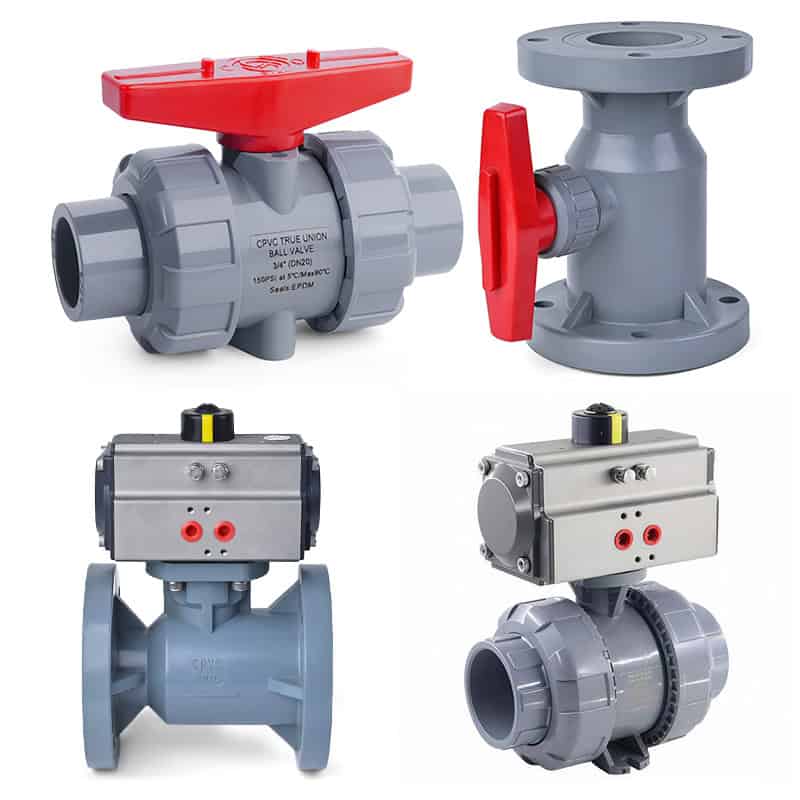
The question is not which is “better.” A manual valve and a pneumatically actuated valve can be the exact same body — same PVDF, CPVC, PPH or UPVC, same seat, same pressure rating — with a different top. One is turned by hand; the other is stroked by an air actuator on a signal. Each is the right answer in different situations, and choosing well is mostly about how often the valve moves, where it sits, and what happens if it is left in the wrong position.
This guide gives a straightforward framework for deciding when to automate a plastic valve — the factors that actually drive the choice, the return-on-investment logic, and a real mine retrofit where automating the right valves cut a six-person job down to one. Huiya builds both manual and pneumatic versions of every valve below, so the aim here is to help you pick correctly, not to push you one way.
The short version: automate a valve when it is cycled often, sits somewhere awkward or unsafe to reach, needs remote or automatic control, or must fail to a safe position on its own. Keep it manual when it is operated rarely, is easy to reach, and does not need to talk to a control system.
Manual vs pneumatic: the core difference
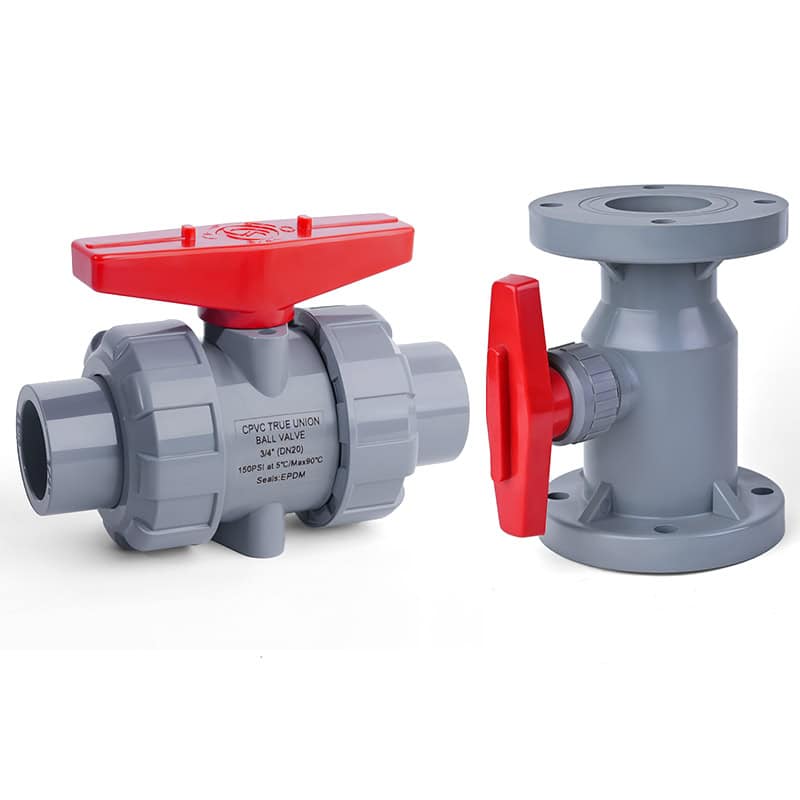
A manual valve is operated by a hand lever or gearbox — a person walks up to it and turns it. It is simple, needs no utilities, and costs the least per unit.
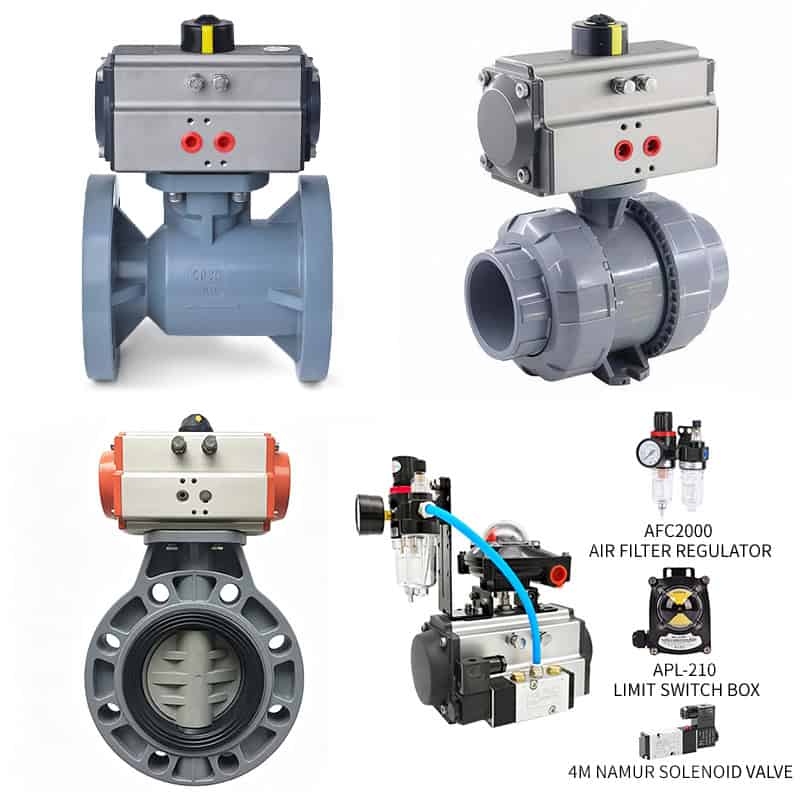
A pneumatic (actuated) valve carries an air actuator on top. Compressed air strokes the valve open or closed on command from a solenoid valve, which in turn takes its signal from a PLC, DCS or simple switch. No one has to be at the valve. Everything below the actuator — body, ball or disc, seat, seals — can be identical to the manual version. Automation is a layer you add to the same valve, which is why the decision is about the duty, not the valve itself.
When a manual valve is the right choice
Automation is not automatically better. A manual valve is often the smarter, leaner choice when:
- It is operated infrequently — a set-and-forget isolation valve, a seasonal or commissioning-only valve, a drain that is touched once a month.
- It is easy and safe to reach — at working height, in a walkable area, with no hazardous atmosphere around it.
- There is no need for remote or automatic control — the process does not have to sequence or interlock this valve, and a person operating it on site is perfectly acceptable.
- Budget or valve count rules it out — across dozens of rarely used valves, the cost of actuators, solenoids, air and wiring will not pay back.
- There is no compressed air on site — without an air supply (and the compressor, drying and piping behind it), a pneumatic valve has nothing to run on.
For these duties, a hand-operated UPVC butterfly valve or CPVC ball valve does the job at the lowest cost and with nothing to go wrong on the actuation side.
When to automate: the decision factors
Switch to a pneumatic valve when one or more of these apply — the more that stack up, the clearer the case:
- Frequent cycling. A valve operated many times a shift burns operator time and drifts out of consistency when done by hand. An actuator repeats the same stroke every time, indefinitely.
- Hard-to-reach, unsafe or distributed locations. Valves up towers, down in pits, spread across a large plant, or in hazardous zones are slow and risky to reach by hand. Automation brings control to the operator instead of sending the operator to the valve.
- Remote and automatic control. If the valve must be driven by a PLC/DCS, sequenced with the process, or operated from a control room, it has to be actuated.
- Speed and consistency. A pneumatic actuator strokes in roughly one to two seconds, identically each cycle — impossible to match with a person and a hand lever.
- Fail-safe safety. A spring-return actuator drives the valve to a safe position — fail-closed or fail-open — the instant air or power is lost. You cannot rely on a person to do that in an upset.
- Hazardous or aggressive media. Automation keeps operators away from the fluid; paired with explosion-proof air preparation, pneumatic valves suit dusty or flammable (Ex) areas.
- Labour cost and headcount. This is where the return usually lives. Automation removes repetitive manual rounds and frees people for higher-value work.
When these point to automation, browse the full range of automated pneumatic plastic valves, and see our guide on how to size the actuator to the valve.
Does automation pay? The ROI logic
Automating a valve costs more up front — the actuator, a solenoid valve, air preparation, wiring and control integration on top of the valve. Whether that pays back is a straightforward comparison:
Automation pays when the annual saving beats the added cost. On the saving side: operator hours removed × number of operators × how often the valve is cycled, plus the value of consistency, safety and avoided downtime. Payback is fastest when the valve is cycled often, needs several operators or long walking rounds, sits somewhere awkward, or is safety-critical. A rarely used, easy-to-reach valve almost never pays back.
The practical takeaway: automate the right valves, not every valve. On most sites a minority of high-cycle, hard-to-reach or safety-critical valves justify automation, while the long tail of set-and-forget valves stays manual. The case below is exactly that pattern.
Case study: automating a mine’s butterfly valves
At an iron ore mine in Inner Mongolia, China, the plant ran more than 500 UPVC (PVC) handle butterfly valves in DN100 (4″) and DN125 (5″). Because they were spread across multiple floors, operators had to climb up and down to open and close them by hand — slow, labour-intensive, and a drain on the crew every shift.
Huiya’s engineers specified pneumatic UPVC butterfly valves with explosion-proof air-preparation (FRL) units to suit the environment. The DN100 (4″) valves were fitted with Huiya AT75 actuators and the DN125 (5″) valves with AT105 actuators, all driven through the plant PLC.
Result: work that previously took six operators is now handled comfortably by one — the valves open and close on command from the control system instead of on foot, and the up-and-down manual rounds are gone.
The actuator sizing here lines up with the method in our actuator sizing guide: a DN100 plastic butterfly valve needs about 55 N·m, which an AT75 double-acting actuator covers at 6 bar. If you are weighing a similar retrofit, the same pneumatic UPVC butterfly valve is available across DN40–DN600.
What automation adds — physically and in the package
Two things change when you go pneumatic: the assembly gets heavier, and it needs a few supporting components.
Weight and footprint
The actuator adds weight above the valve, which matters for mounting and support. Using Huiya’s UPVC butterfly valves as an example:
| Size | Manual (hand lever) | Pneumatic (with actuator) | Actuator adds |
|---|---|---|---|
| DN50 | 1.49 | 3.49 | +2.0 |
| DN65 | 1.69 | 3.69 | +2.0 |
| DN80 | 2.19 | 4.69 | +2.5 |
| DN100 | 2.91 | 5.41 | +2.5 |
| DN125 | 4.12 | 8.32 | +4.2 |
| DN150 | 5.06 | 10.76 | +5.7 |
| DN200 | 8.05 | 13.75 | +5.7 |
CPVC and PPH follow the same pattern; the actuator adds roughly the same weight regardless of body material. Plan pipe support accordingly, especially on larger valves and long unsupported runs.
The supporting components
A pneumatic valve is more than a valve and an actuator. Depending on the control you need, add:
- Solenoid valve — converts the electrical signal from your control system into the air action that strokes the actuator.
- Limit switch / position feedback — confirms open and closed back to the PLC so the control system knows the valve’s actual state.
- Positioner — for modulating or throttling duty, where the valve holds an intermediate position rather than just open/closed.
- Air preparation (FRL) — a filter-regulator-lubricator that delivers clean, dry, regulated air; explosion-proof versions suit hazardous areas, as in the mine above.
Huiya supplies these as options, so the valve, actuator and accessories arrive as one matched automated package rather than parts to integrate yourself.
Can I retrofit an existing manual valve?
Often, yes — the same valve body can usually accept an actuator, since the manual and pneumatic versions share the body. The key is sizing the actuator to the valve’s real torque so it opens and closes reliably; our actuator sizing guide walks through it with torque charts and worked examples. Where a clean, warrantied assembly matters, specifying the factory-built pneumatic version is usually simpler than field-fitting an actuator to an in-service valve.
Comparison at a glance
| Manual valve | Pneumatic valve | |
|---|---|---|
| Operation | Turned by hand (lever/gear) on site | Stroked by air on a signal, no operator at the valve |
| Remote / automatic control | No | Yes — PLC/DCS, sequencing, control room |
| Speed & consistency | Depends on the operator | ~1–2 s, identical every cycle |
| Fail-safe on power/air loss | Stays as left | Spring-return moves it to a safe position |
| Cost per unit | Lowest | Higher (actuator + accessories) |
| Weight / footprint | Light | Heavier — actuator on top |
| Best for | Infrequent, accessible, standalone valves | High-cycle, remote, hazardous or safety-critical valves |
Frequently asked questions
When should I automate a valve?
Automate when the valve is cycled often, sits somewhere hard or unsafe to reach, needs remote or automatic control from a PLC/DCS, or must fail to a safe position on air or power loss. Keep it manual when it is operated rarely, is easy to reach, and does not need to integrate with a control system.
Is a pneumatic valve worth the extra cost?
It depends on the duty. Weigh the added cost (actuator, solenoid, air preparation, wiring) against the annual saving in operator time, plus the value of consistency, safety and avoided downtime. High-cycle, hard-to-reach or safety-critical valves usually pay back quickly; rarely used, accessible valves generally do not. Automate the ones that pay, and leave the rest manual.
Can I put an actuator on my existing manual valve?
Usually yes, because the manual and pneumatic versions share the same body. The important step is sizing the actuator to the valve’s torque so it operates reliably. For a clean, factory-warrantied result, specifying the pneumatic version is often simpler than retrofitting an in-service valve.
What do I need besides the actuator?
Typically a solenoid valve (to convert the control signal into air action), position feedback/limit switches (to confirm open and closed), air preparation (a filter-regulator-lubricator; explosion-proof for hazardous areas), and a positioner if the valve must throttle rather than just open and close. Huiya can supply these together as one package.
Manual or pneumatic for a hazardous area?
Pneumatic, with explosion-proof air preparation. Automation keeps operators away from the hazard, and explosion-proof (Ex) components suit dusty or flammable environments — the approach used for the mine retrofit above.
Huiya’s manual and pneumatic valve range
Huiya builds both versions of every valve in UPVC, CPVC, PPH and PVDF, so you can choose manual or automated without changing the body, seat or material. If the body material itself is still open, our plastic valve material selection guide matches the resin to your chemistry and temperature.
Manual valves
- Ball valves — PVDF, CPVC, PPH and UPVC ball valves.
- Butterfly valves — PVDF, CPVC, PPH and UPVC butterfly valves.
Pneumatic (automated) valves
All of these are available as pneumatic plastic valves with double-acting or spring-return actuators:
- True-union ball valves — PVDF, CPVC, PPH and UPVC pneumatic true union ball valves.
- Flanged ball valves — PVDF, CPVC, PPH and UPVC flanged pneumatic ball valves.
- Butterfly valves — PVDF, CPVC, PPH and UPVC pneumatic butterfly valves.
Deciding on automation, or sizing it? Start with our complete pneumatic ball valve selection guide. Tell us your valve type and size, how often it cycles, where it sits and whether you need a fail-safe position, and Huiya’s engineers will advise manual or pneumatic — and, if automated, spec the actuator and accessories to match. Request a quote.