
Huiya manufactures a complete range of industrial plastic valves for corrosion-resistant flow control — in UPVC, CPVC, PPH and PVDF valves, manual or pneumatically actuated, from DN15 to DN500. Where metal valves corrode, seize and scale, thermoplastic valves handle aggressive acids, alkalis, brine, chlorine and high-purity media at a fraction of the weight and cost, with no rust and no lining to fail. Every valve is offered in DIN metric, ANSI/ASTM and JIS dimensions, hydrostatically tested at 1.5× rated pressure, and backed by a 12-month quality warranty.
Which plastic valve type do you need?
The valve type is set by what the line has to do — isolate, regulate, or handle solids. Each of our four patterns solves a different problem:
| Valve type | Best for | Throttling | Size range |
|---|---|---|---|
| True union ball valve | Tight quarter-turn shut-off on small-to-mid bore; unbolts for service without cutting pipe | No | DN15–DN100 |
| Flanged ball valve | Shut-off on large-bore and already-flanged lines; bolted joint stays tight under thermal cycling | No | DN15–DN200 |
| Butterfly valve | Large-diameter lines, flow regulation, low weight and cost | Yes | DN25–DN500 |
| Diaphragm valve | Slurries, crystallising and ultra-corrosive media; the diaphragm isolates the fluid from the stem — no packing to leak, no cavity to jam | Yes | DN15–DN200 |
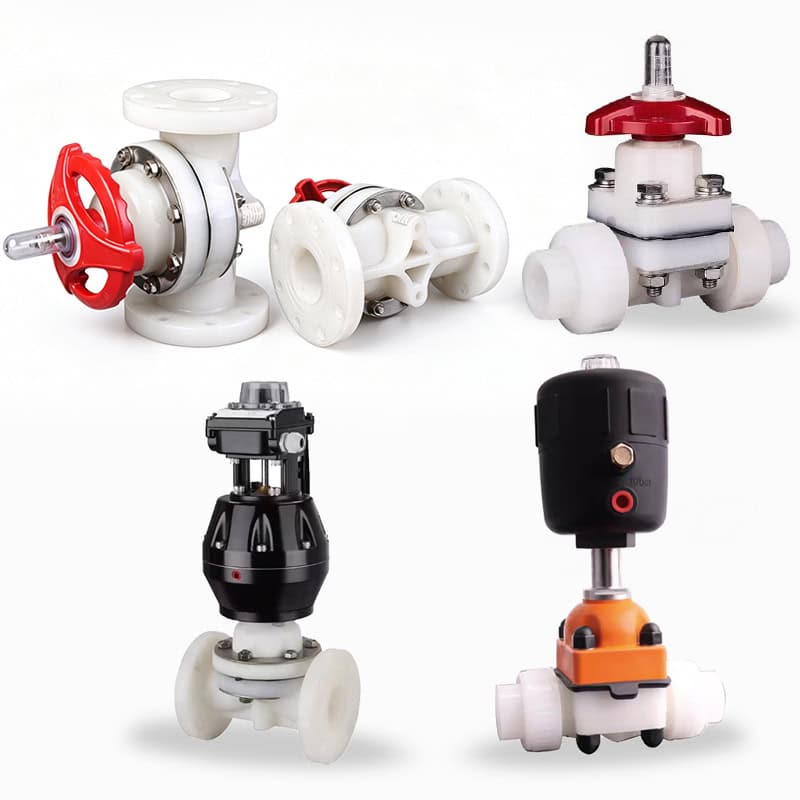
PVDF Diaphragm Valve
PVDF Diaphragm Valve PVDF diaphragm valves handle the media that defeat other plastics — concentrated…
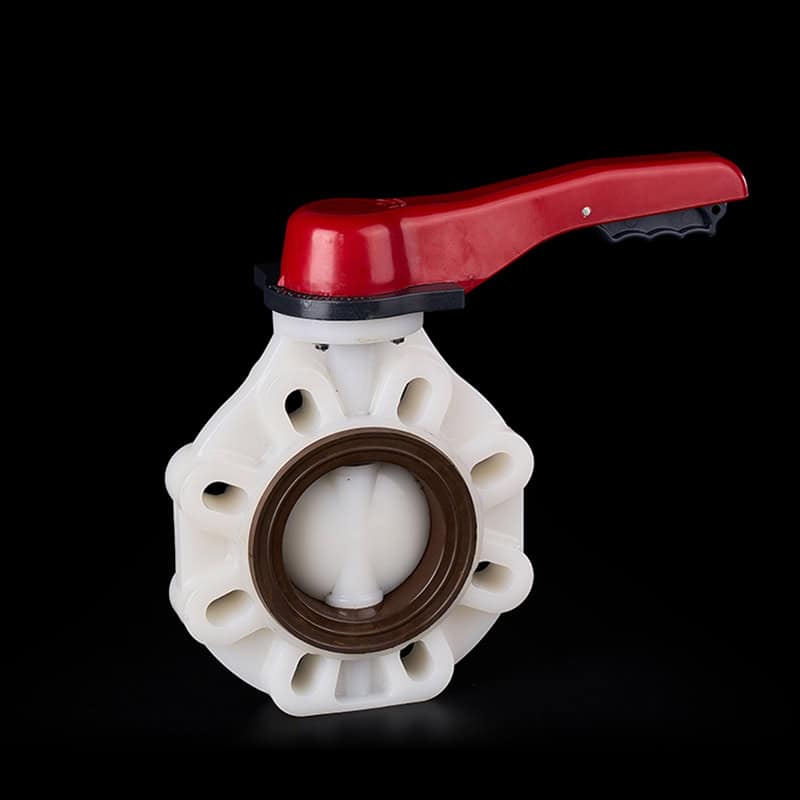
PVDF Butterfly Valve
PVDF Butterfly Valve PVDF butterfly valves give you compact, quarter-turn control of large-bore corrosive lines…
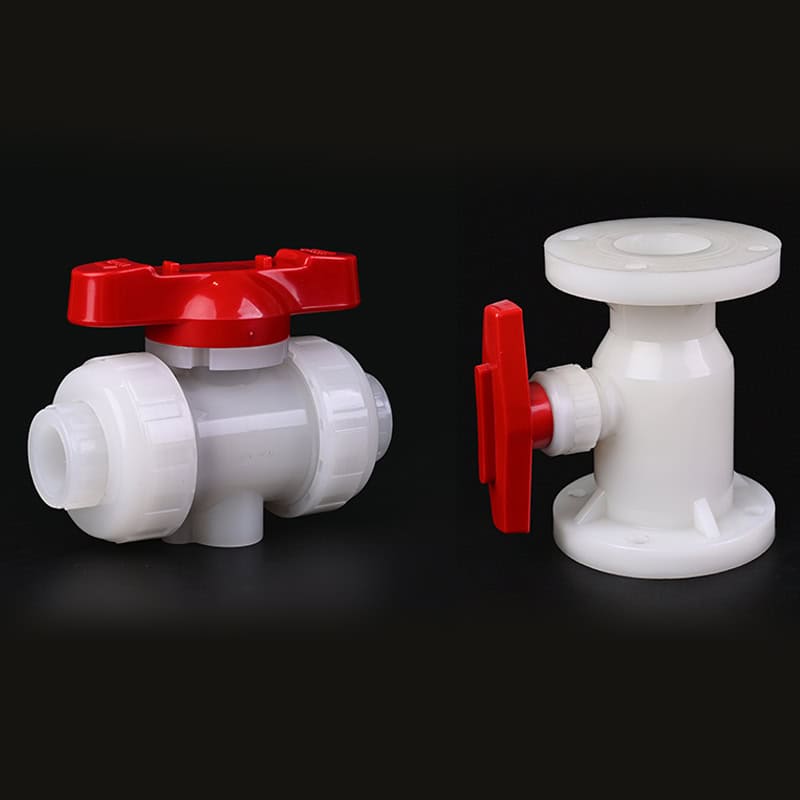
PVDF Manual Ball Valve
PVDF Manual Ball Valve PVDF ball valves (manual) give you quarter-turn on/off control of the…
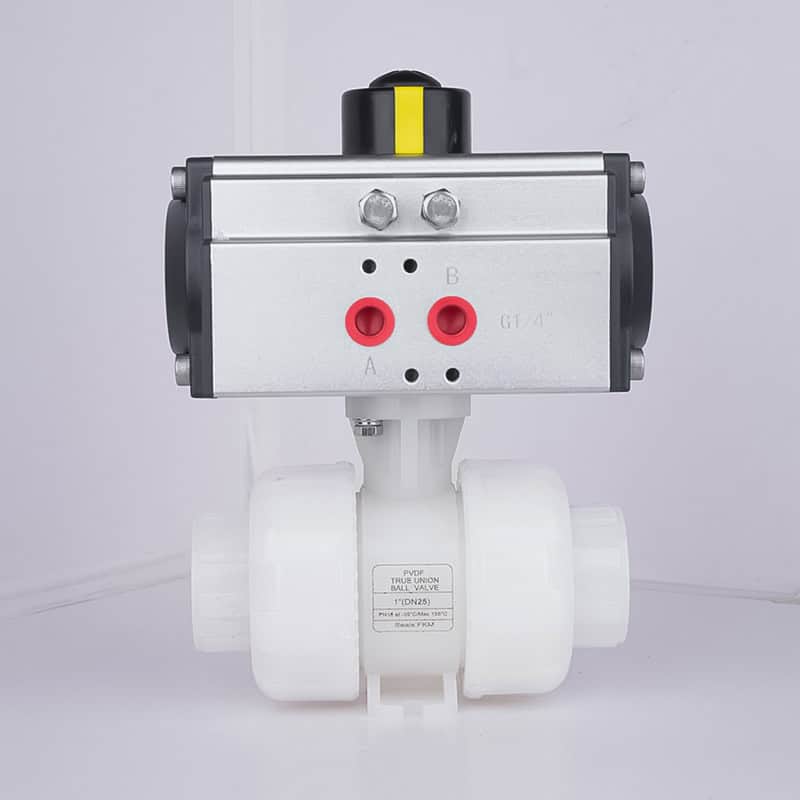
PVDF Pneumatic True Union Ball Valve
PVDF Pneumatic True Union Ball Valve When a line carries 98% sulfuric acid, hydrofluoric acid,…
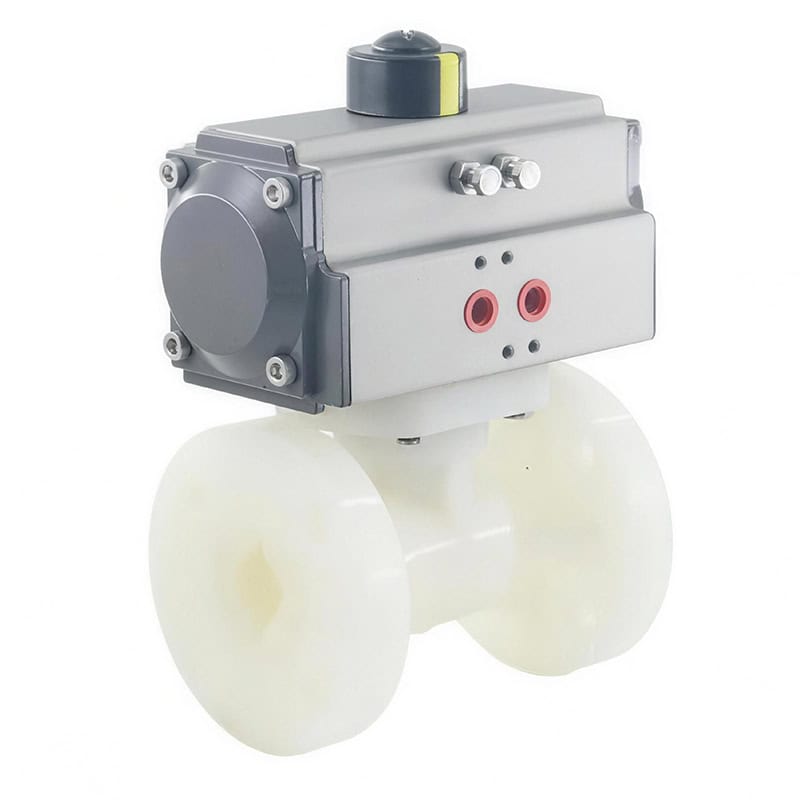
PVDF Pneumatic Flanged Ball Valve
PVDF Pneumatic Flanged Ball Valve The Huiya PVDF pneumatic flanged ball valve brings PVDF’s extreme…
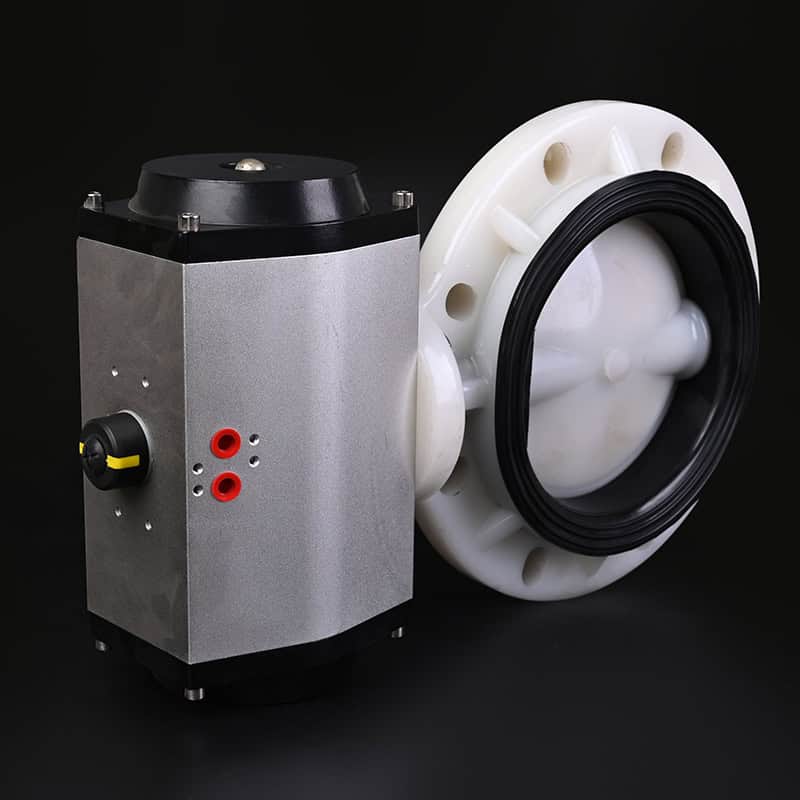
PVDF Pneumatic Butterfly Valve
PVDF Pneumatic Butterfly Valve The Huiya PVDF pneumatic butterfly valve gives compact, automated isolation and…
The practical rule: ball valves for tight on/off below DN80; butterfly valves from DN80 up, or wherever you need to regulate flow; diaphragm valves whenever the media carries solids, crystallises, or must never touch the stem. For the full comparison, see our guides on ball valve vs butterfly valve and when to choose a diaphragm valve.
Which body material?
The material sets the chemical and temperature envelope of the whole valve — and getting it wrong is what cracks, swells and fails a plastic line. Match it to your medium and your temperature, not one or the other:
| Material | Max temperature | Best for | Avoid |
|---|---|---|---|
| UPVC / PVC | ~55 °C | Ambient water, RO and seawater, irrigation, mild chemicals — the low-cost workhorse | Hot fluids, solvents |
| CPVC | ~90 °C | Hot water and acidic media — sulfuric and hydrochloric acid, sodium hypochlorite, copper leach | Hot caustic, solvents |
| PPH | ~85 °C | Strong caustic, alkalis and brine — chlor-alkali and caustic dosing | Oxidising acids, chlorine |
| PVDF | ~120 °C | Concentrated acids, hydrofluoric acid, wet and dry chlorine, halogens | Hot concentrated caustic, ketones |
Weigh all four side by side in our plastic valve material selection guide, or look up your exact medium — concentration and temperature — in our chemical resistance checker.
How to specify a plastic valve: four steps
- 1. Medium and temperature → body material. Match your fluid, its concentration and its operating temperature to UPVC, CPVC, PPH or PVDF. This single decision prevents most field failures.
- 2. Duty → valve type. On/off isolation → ball valve. Flow regulation or large bore → butterfly valve. Solids, slurries or crystallising media → diaphragm valve.
- 3. Line size and existing pipe → connection. True union to remove the valve without cutting pipe; flanged for large bore and existing flanged systems; wafer or lug for butterfly.
- 4. Operation → actuation. Operator-switched → manual lever or handwheel. Automated dosing, interlocks or fail-safe shut-off → pneumatic actuation, double-acting or spring-return.
One point engineers miss: the seat and seal set the real chemical limit as often as the body does. Our valves use PTFE seats with EPDM or FKM O-rings — confirm both against your chemistry, not just the plastic.
Not sure which model fits your line? Our guide explains how to select a PVDF valve by media, seal and valve type, with a confirmed chemical compatibility table.Why Huiya
Chemical compatibility charts only hold if the resin behind the valve is what the chart assumes. We mould every valve from 100% virgin resin — no regrind, no fillers, so the compatibility you look up is the compatibility you get. Valves are built to EN ISO 16135 (PVC and CPVC models also to ASTM F1970), ship factory-direct from our own plant, MOQ 20 pieces, about 7 days for standard items.
Tell us your medium, its concentration and temperature, and your line size — our engineers will specify the body, valve type, connection, actuation and seat, and flag any temperature or compatibility trap before it becomes a problem. Request a quote.
Guides and resources
- How to choose a plastic ball valve — materials, connections, actuation and standards
- Diaphragm valve guide — how they work, the dual-layer diaphragm, and when to use one
- Ball valve vs butterfly valve — where the DN80 dividing line comes from
- Plastic valve material selection guide — UPVC, CPVC, PPH and PVDF compared
- Chemical resistance checker — look up your medium across all materials
- Why a PVC ball valve leaks — causes and fixes