
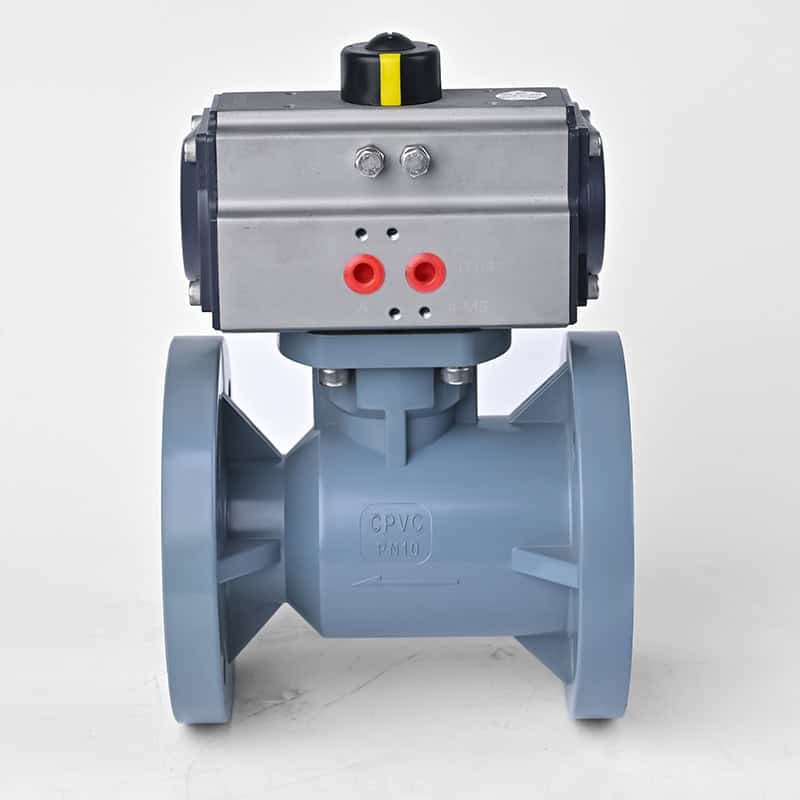
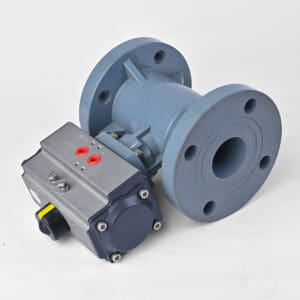
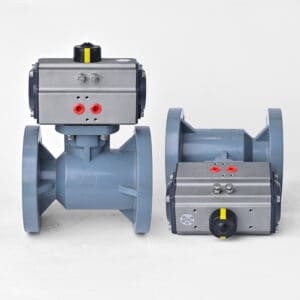
CPVC Flanged Pneumatic Ball Valve
The Huiya CPVC flanged pneumatic ball valve is a large-bore automated valve for corrosive and high-temperature fluid control in chemical processing, water treatment, and mining. Available in ANSI Class 150, DIN PN10, and JIS 10K flange standards and sizes from DN15 to DN200, it pairs CPVC’s chemical resistance with a one-piece molded flange that eliminates root leakage — giving you a single supplier for projects on any regional standard, anywhere in the world.
One Supplier for Every Flange Standard
Industrial projects in different regions use different flange standards: ANSI in North and South America, DIN across Europe, the Middle East and Southeast Asia, and JIS in Japan and Korea. Sourcing valves for multi-country projects usually means dealing with multiple suppliers.
Huiya manufactures this ball valve in all three standards — ANSI Class 150, DIN PN10, and JIS 10K — so you can standardize on one supplier regardless of where your project is or which flange standard your piping uses. You specify the standard when ordering; we build to it.
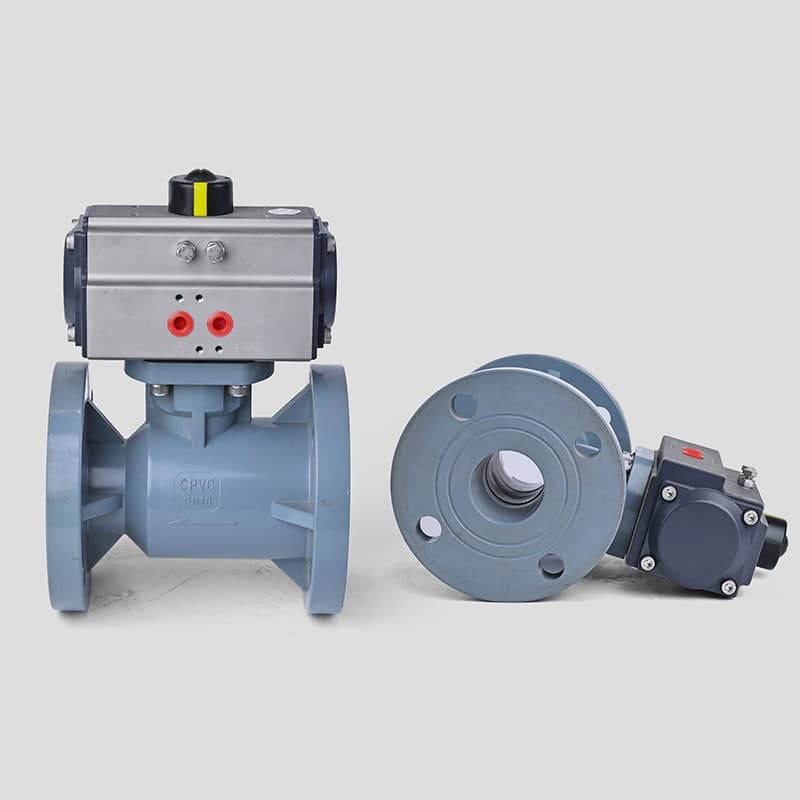
One-Piece Molded Flange: Zero Root Leakage
The most common failure point on a plastic flanged valve is the flange root — where the flange meets the valve body. On valves with welded or assembled flanges, this joint can leak under pressure or thermal cycling.
Huiya’s flange is molded as one piece with the valve body. There is no welded or glued joint at the flange root, which means no root leakage path — even under pressure spikes and temperature swings. This is verified by our burst-pressure testing: rated at PN16 (1.6 MPa) at 20°C, the valve has been tested to 4.8 MPa (696 PSI) with no body rupture and no flange root leakage.
Technical Specifications
| Specification | Detail |
| Valve Type | Flanged pneumatic ball valve, one-piece molded flange |
| Body Material | CPVC |
| Size Range | DN15–DN200 (1/2″–8″) |
| Bore | Standard port |
| Flange Standards | ANSI Class 150 / DIN PN10 / JIS 10K |
| Sealing Face | Raised face (RF) |
| Pressure Rating | PN16 (1.6 MPa) at ambient temperature |
| Max. Temperature | 93°C (200°F) |
| Ball | CPVC |
| Seats & Seals | PTFE |
| Actuator | Pneumatic, double-acting or spring-return, aluminum alloy |
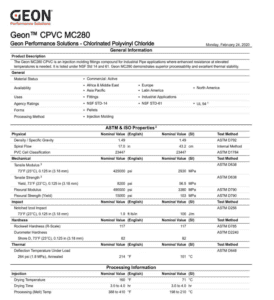
| Standards | ASTM D1784 (compound), ASTM F441 (dimensions) |
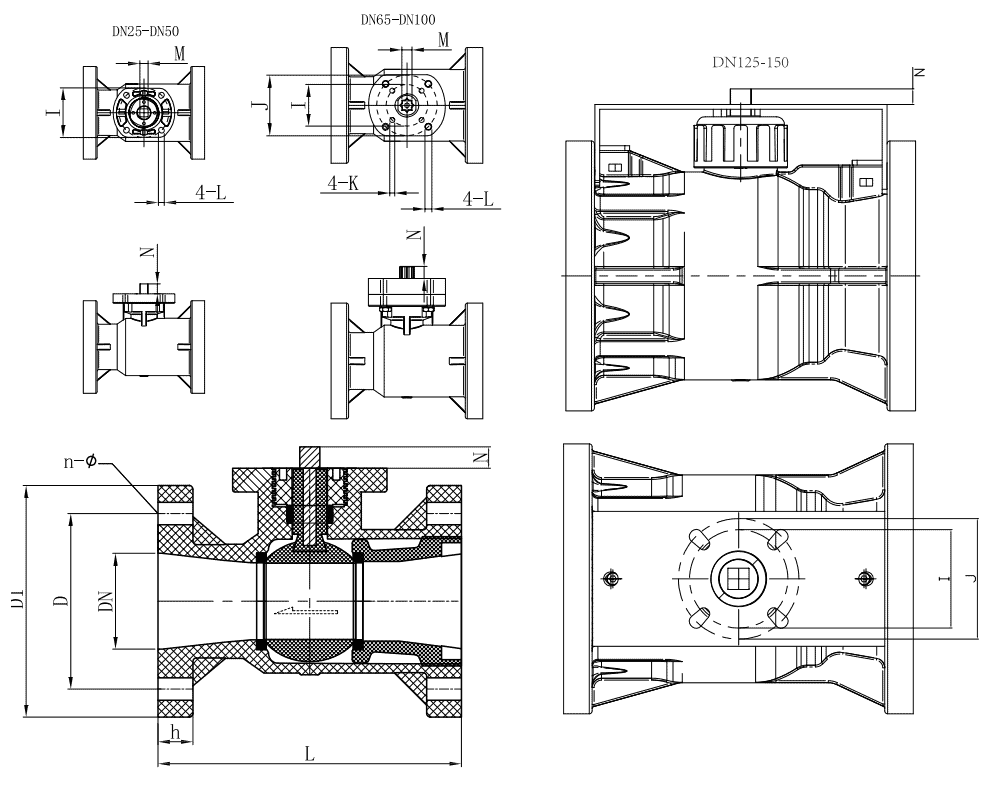
Dimensions
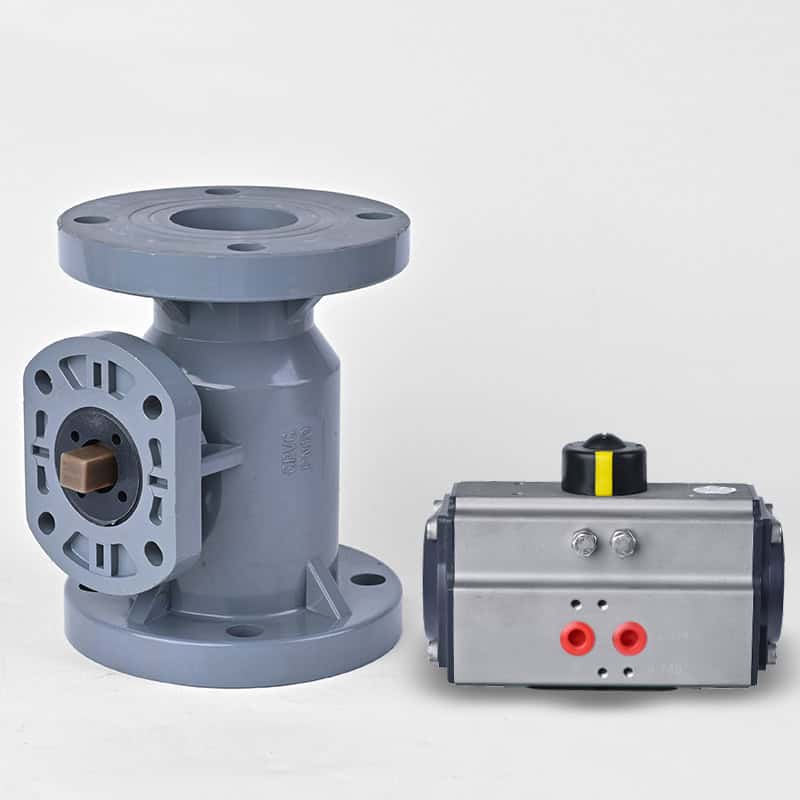
Unlike standard manual valves, our one-piece flanged ball valve features a built-in ISO 5211 mounting pad and a reinforced square stem. This allows you to easily install your own pneumatic or electric actuators without needing extra brackets or couplings.
| DN | D1 | D — Flange OD | L | b | ||
|---|---|---|---|---|---|---|
| DIN | JIS | ANSI | ||||
| 15 | 95 | 65 | 70 | 60 | 100 | 15 |
| 20 | 105 | 75 | 75 | 70 | 120 | 17 |
| 25 | 115 | 85 | 90 | 79 | 140 | 17 |
| 32 | 135 | 100 | 100 | 89 | 160 | 18 |
| 40 | 145 | 110 | 105 | 98 | 165 | 18 |
| 50 | 160 | 125 | 120 | 121 | 180 | 20 |
| 65 | 180 | 145 | 140 | 140 | 220 | 22 |
| 80 | 195 | 160 | 150 | 152 | 250 | 22 |
| 100 | 215 | 180 | 175 | 190 | 280 | 25 |
| 125 | 245 | 210 | 210 | 216 | 325 | 30 |
| 150 | 280 | 240 | 240 | 241 | 355 | 30 |
| 200 | 335 | 295 | 290 | 298 | 405 | 35 |
All dimensions in mm. D1 = flange thickness diameter reference, D = flange outer diameter (varies by standard), L = end-to-end length, b = flange thickness. Bolt count and bolt-hole diameter vary by standard and size; full drilling templates for ANSI Class 150, DIN PN10, and JIS 10K available on request.
Actuator Torque Requirements
| DN | 15 | 20 | 25 | 32 | 40 | 50 | 65 | 80 | 100 | 125 | 150 | 200 |
|---|---|---|---|---|---|---|---|---|---|---|---|---|
| Torque (N·m) | ≤10 | ≤10 | ≤10 | 12 | 15 | 20 | 40 | 45 | 65 | 85 | 130 | 150 |
Design torque values for actuator sizing — these already include a 1.6× safety factor over measured valve torque, so size the actuator directly against them. For scaling, slurry or crystallising media, see how to size a pneumatic actuator for the higher ratios. Our engineering team can confirm the actuator for your operating pressure.
Chemical Compatibility
This valve uses PTFE seats and seals throughout. PTFE is chemically inert against nearly all industrial media, giving the valve broad compatibility across acids, alkalis, and salts — handling fluids from pH 0 to 14.
CPVC body suitability covers sodium hydroxide, hydrochloric acid, phosphoric acid, sodium hypochlorite, chlorine water, nitric acid (30–50%), sulfuric acid (10–80%), and a wide range of salts.
Applications
Built for large-bore, higher-pressure lines and for connecting to existing flanged pipework:
Flanged vs True Union: Which Ball Valve to Choose?
Huiya offers both. Use this guide:
- Choose this flanged ball valve for larger sizes (up to DN200), higher-pressure duty, connection to existing flanged pipework, or when you need the strongest, most leak-resistant connection with the fewest external leak points.
- Choose the true union ball valve for smaller sizes (DN15–DN100) and when you need to service the valve without cutting the pipe.
Engineering Note: Seal Selection on Oxidizing Media
A question we hear often: “Can I use an EPDM O-ring to save cost on a sodium hypochlorite (bleach) line?”
Our answer: no. Sodium hypochlorite degrades EPDM within weeks. For halogen and strong-oxidizing environments, the seal must be PTFE or FKM (Viton) — never EPDM. This valve uses PTFE seats and seals throughout, which is why it handles oxidizing media like sodium hypochlorite and chlorine water reliably. The few dollars saved on the wrong elastomer will cost thousands in downtime.
This is the kind of application-specific advice we give every customer: the right material specified once is always cheaper than the wrong material replaced twice.
Common Selection Mistakes to Avoid
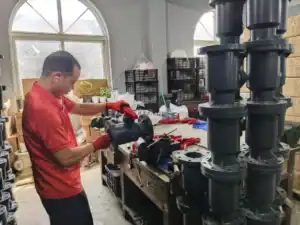
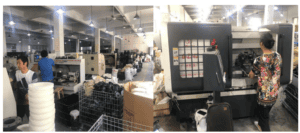
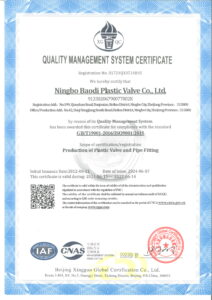
Quality & Reliability
The same flanged ball valve is available in PVC for lighter duty, PPH for hot alkalis and PVDF for concentrated acids and solvents. Smaller line you’ll open for maintenance? The CPVC true union ball valve unscrews without cutting the pipe; for big diameters, the CPVC butterfly valve saves weight and actuator cost. Unsure of the material? Ask our engineers — Material Selection Service. View all CPVC valves.
Sizing the actuator? See how to size a pneumatic actuator for a plastic valve for torque tables and worked examples, or the complete pneumatic ball valve selection guide for seat and fail-safe choices. Still deciding whether to automate? Read manual vs pneumatic valves: when to automate. To compare CPVC against the other bodies, see the plastic valve material selection guide. Browse the full range of pneumatic plastic valves.
Frequently Asked Questions
Q: Which flange standards are available?
ANSI Class 150, DIN PN10, and JIS 10K. Specify the standard when ordering — we manufacture each version to its respective bolt pattern. This makes us a single source for projects on any regional standard.
Q: What size range do you offer?
DN15 to DN200 (1/2″ to 8″), standard port.
Q: Why a one-piece molded flange?
Because the flange is molded as one piece with the body, there’s no welded or glued joint at the flange root — eliminating the most common leakage path on plastic flanged valves. It’s burst-tested to 4.8 MPa with no root leakage.
Q: What is the maximum temperature?
93°C (200°F) for continuous service — suitable for hot acid and chemical lines where UPVC (limited to ~60°C) would fail.
Q: Can it handle sodium hypochlorite?
Yes. The PTFE seats and seals resist oxidizing media like sodium hypochlorite and chlorine water — unlike EPDM, which degrades quickly in these environments.
Q: Should I choose flanged or true union?
Flanged for larger sizes (up to DN200), higher pressure, or connecting to flanged pipework. True union for DN15–DN100 when you need to service the valve without cutting the pipe.
Q: Do you supply double-acting and spring-return actuators?
Yes, plus solenoid valves, limit switches, and positioners on request.
Q: What gasket and bolt torque should I use?
Use a full-face gasket and tighten bolts evenly in a cross pattern to a moderate torque — never overtighten a plastic flange. We can provide specific guidance for your size and standard.
Get a factory-direct quote
Send us your medium, its concentration and temperature, and the line size. Our engineers confirm the right body material, seat and valve type — and reply within 24 hours.