
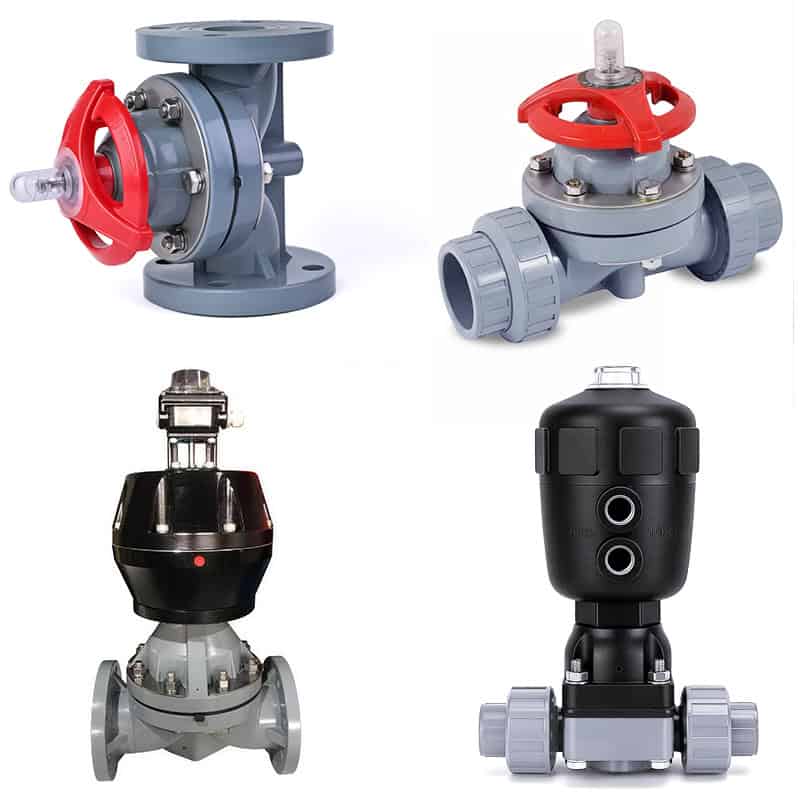
CPVC diaphragm valves bridge the gap between general-purpose UPVC and high-end PVDF: they hold up to hot corrosive media to about 90 °C — hot water, dilute-to-moderate acids, and oxidising bleaches — at a fraction of the cost of fluoropolymer. We supply them in true union, flanged, and pneumatic configurations for hydrometallurgy, metal finishing, and chlor-alkali service.
A diaphragm valve isolates the media behind a flexible diaphragm, so no stem packing contacts the fluid and there is no crevice to trap or contaminate it. In CPVC, that gives you a clean, low-maintenance valve for hot acidic and oxidising lines where UPVC would soften and metal would corrode.
CPVC chemical compatibility
CPVC is rated to about 90 °C and is especially strong on hot acidic and oxidising media.
Suitable: hot and cold water; sulfuric acid (approx. 10–80%); dilute hydrochloric and phosphoric acids; sodium hypochlorite (bleach); copper-ore acidic leach solutions; chlorine water.
Not recommended: aromatic and chlorinated solvents (benzene, toluene, xylene); fuming sulfuric acid; concentrated nitric acid.
As with all thermoplastics, the allowable pressure falls as temperature rises. For a specific medium and temperature, send us the details or see our chemical resistance reference.
Why our CPVC diaphragm valves
- High-temperature rigidity and pressure. CPVC keeps its structural strength and pressure rating in combined hot-and-acidic duty, where UPVC begins to soften.
- The value choice for hot acids. It outperforms UPVC on hot acidic media while costing far less than PVDF — the cost-effective middle ground for hot acid service.
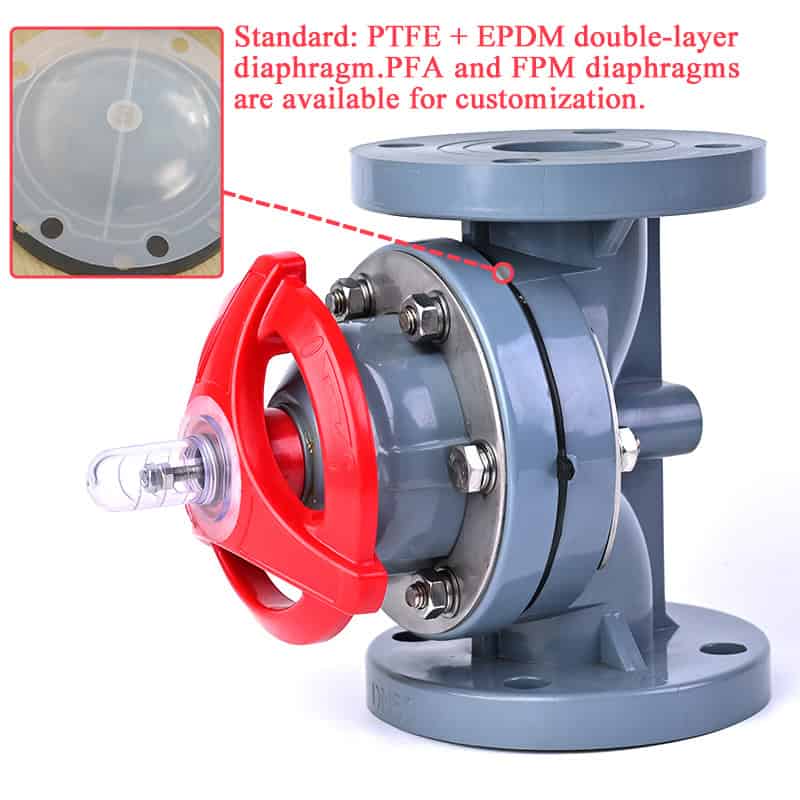
- Double-diaphragm design, low compression set. The diaphragm assembly seals tightly and the body distributes closing pressure evenly, lowering closing torque and keeping flow regulation stable.
- No dead space, no packing wear. The diaphragm seals the media completely — nothing stagnates and nothing wears against the stem.
- Customisable. Bonnet, compressor, stem, bolts, and diaphragm can all be specified, including 304 or 316 stainless steel stems and fasteners. We use virgin branded resin and supply factory-direct.
Diaphragm material options
| Diaphragm | Best suited to |
|---|---|
| EPDM + PTFE | Alkalis, alcohols, acetone, ambient water |
| FKM + PTFE | Oils, aromatics, strong acids, high temperature |
| EPDM + FEP (F46) | High-pressure gas, pure water, anti-permeation duty |
Configurations
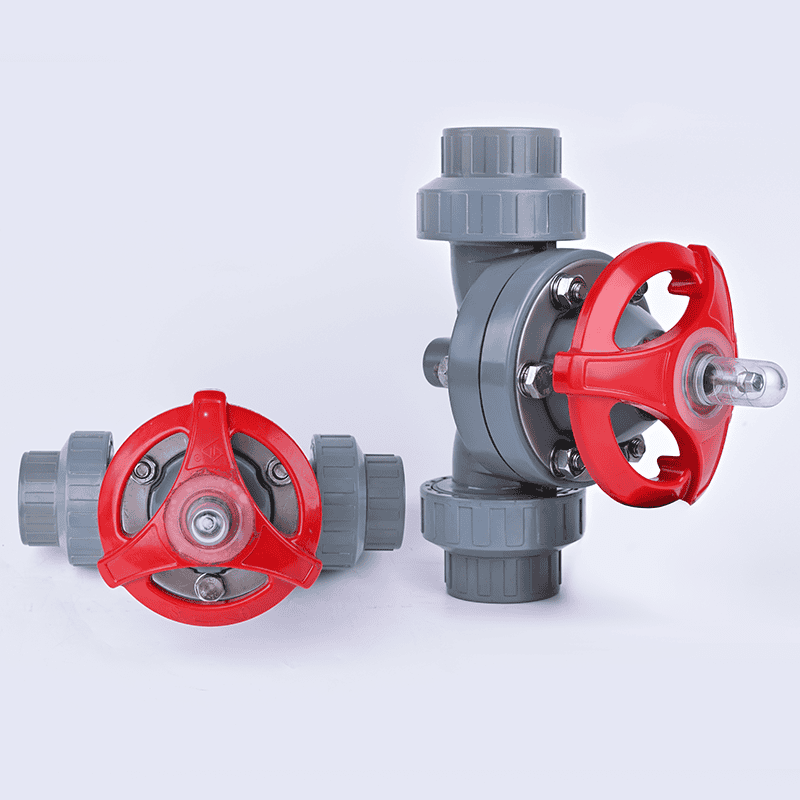
True union CPVC diaphragm valve
Manually operated, DN15–DN50 (1/2″–2″), with union end connectors that let you lift the valve out for service without cutting pipe — ideal for skid-mounted dosing and tight installations.
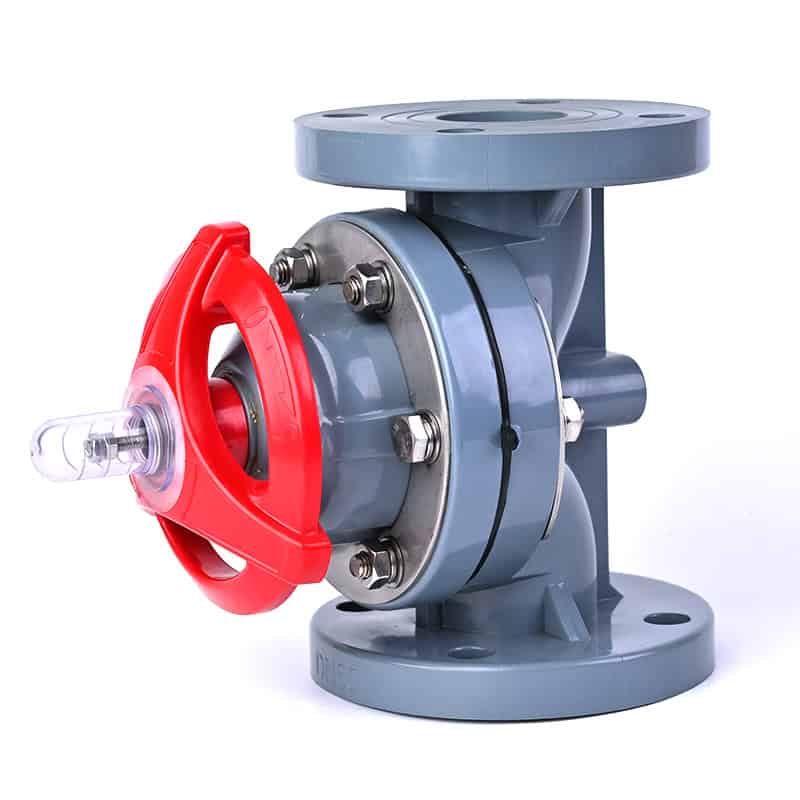
Flanged CPVC diaphragm valve
DN15–DN150 (1/2″–6″) to ANSI, DIN, or JIS flange standards. The bolted flange gives greater strength against pipe stress, vibration, and thermal movement, and is the standard choice for larger-bore and permanent hot-acid lines.
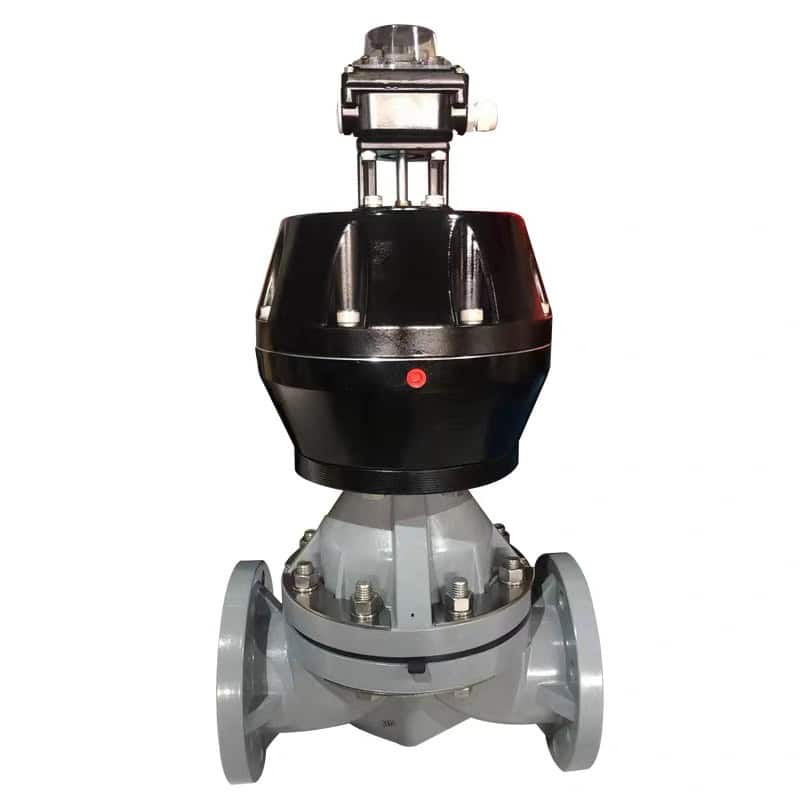
Pneumatic CPVC diaphragm valve
DN15–DN150 with a corrosion-resistant all-plastic actuator in double-acting or spring-return (fail-safe) action. An adjustable closing-stroke stop protects the diaphragm, and the valve accepts solenoid valve, limit switch, positioner, and air filter regulator for automated pickling and dosing lines.
Specifications
| Body material | CPVC (virgin branded resin) |
| Size range | DN15–DN150 (1/2″–6″); true union DN15–DN50 |
| Pressure rating | PN10 (derates with temperature) |
| Max temperature | ~90 °C |
| Body design | Weir type |
| Diaphragm | EPDM + PTFE / FKM + PTFE / EPDM + FEP |
| Connection | True union / flanged (ANSI / DIN / JIS) |
| Operation | Manual / pneumatic (double-acting or spring-return) |
| Stem & bolts | 304 or 316 stainless steel option |
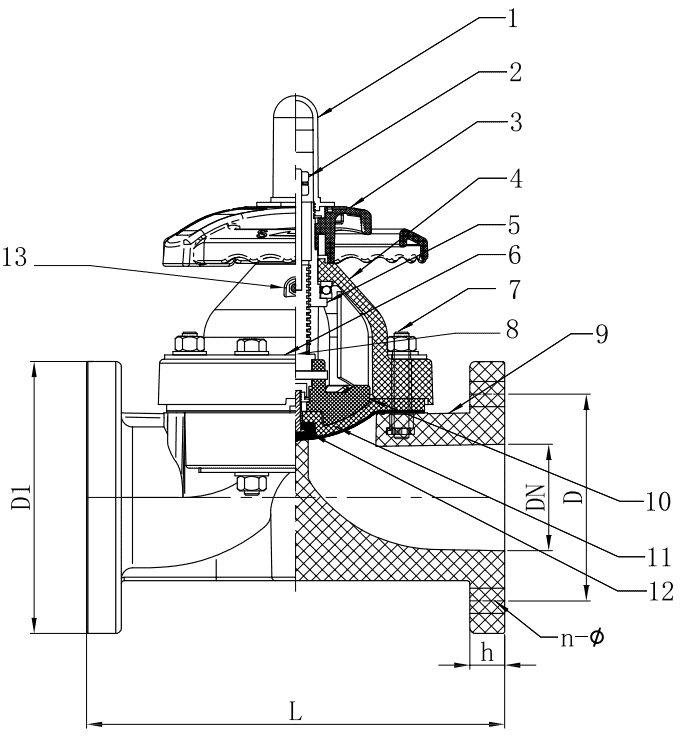
| No. | Parts | Materials |
|---|---|---|
| 1 | Gauge Cover | PC |
| 2 | Stud Nut | Steel, Stainless Steel |
| 3 | Hand Wheel | ABS, PPG |
| 4 | Bonnet | CPVC |
| 5 | Sleeve | Cast Iron with Nickel Plating, Copper Alloy |
| 6 | Board | Plastic-coated Steel, Stainless Steel |
| 7 | Stud Bolt & Nut | Steel, Stainless Steel |
| 8 | Stem | Steel, Stainless Steel, Copper Alloy |
| 9 | Body | CPVC |
| 10 | Compressor | CPVC |
| 11 | Cushion | EPDM, FPM |
| 12 | Diaphragm | EPDM, FPM, PVDF, FEP, PFA, PTFE |
Flanged Diaphragm Valve — Dimensions (mm) 法兰隔膜阀 产品尺寸表
| DN | D1 (mm) | D (mm) | L (mm) | h (mm) | n | φ (mm) | |||||||||||
|---|---|---|---|---|---|---|---|---|---|---|---|---|---|---|---|---|---|
| HG/DIN | JIS | ANSI | HG/DIN | JIS | ANSI | HG | DIN | JIS | ANSI | HG/DIN | JIS | ANSI | HG/DIN | JIS | ANSI | ||
| 15 | 95 | 95 | 95 | 65 | 70 | 60 | 125 | 130 | 110 | 110/108 | 14 | 4 | 4 | 4 | 14 | 15 | 16 |
| 20 | 105 | 100 | 100 | 75 | 75 | 70 | 135 | 150 | 120 | 120/150 | 16 | 4 | 4 | 4 | 14 | 15 | 16 |
| 25 | 115 | 125 | 125 | 85 | 90 | 79 | 145 | 160 | 130 | 130/150 | 16 | 4 | 4 | 4 | 14 | 15 | 16 |
| 32 | 135 | 135 | 135 | 100 | – | 89 | 160 | 180 | 142* | 160 | 16 | 4 | 4 | 4 | 18 | 19 | 16 |
| 40 | 145 | 145 | 145 | 110 | 105 | 98 | 180 | 200 | 180 | 180/176 | 16 | 4 | 4 | 4 | 18 | 19 | 16 |
| 50 | 160 | 160 | 160 | 125 | 120 | 121 | 210 | 230 | 210 | 210/202 | 18 | 4 | 8 | 4 | 18 | 19 | 19 |
| 65 | 180 | 180 | 180 | 145 | 140 | 140 | 250 | 290* | 250 | 250 | 22 | 4 | 8 | 4 | 18 | 19 | 19 |
| 80 | 195 | 195 | 195 | 160 | 150 | 152 | 300 | 310 | 280 | 280/264* | 25 | 8 | 8 | 4 | 18 | 19 | 19 |
| 100 | 215 | 220 | 220 | 180 | 175 | 190 | 350 | 350 | 340 | 340/329* | 25 | 8 | 8 | 8 | 18 | 19 | 19 |
| 125 | 255 | 255 | 255 | 210 | 210 | 216 | 400 | 400 | 410 | 410 | 30 | 8 | 8 | 8 | 18 | 22 | 22 |
| 150 | 280 | 280 | 280 | 240 | 240 | 241 | 460 | 480 | 480 | 480 | 30 | 8 | 8 | 8 | 22 | 23 | 22 |
| 200 | 340 | 340 | 340 | 295 | 290 | 298 | 575 | 600* | 570 | 570 | 38 | 8 | 12 | 8 | 22 | 23 | 22 |
| 250 | 395 | 395 | 395 | 350 | 355 | 362 | 685 | 730* | 680 | 680 | 38 | 12 | 12 | 12 | 25 | 25 | 26 |
| 300 | 480 | 480 | 480 | 400 | 400 | 432 | 790 | – | – | – | 40 | 12 | 16 | 12 | 22 | 25 | 26 |
D1 = flange OD; D = bolt-circle dia. (PCD); L = face-to-face length; h = flange thickness; n = number of bolt holes; φ = bolt-hole dia. Values given per flange standard (HG / DIN / JIS / ANSI). * non-standard — confirm the bolt pattern when ordering. A “/” in the ANSI column shows two reference values. DN300 L is listed for HG only. DN32 D (JIS) was not legible in the source image — please confirm from your drawing.
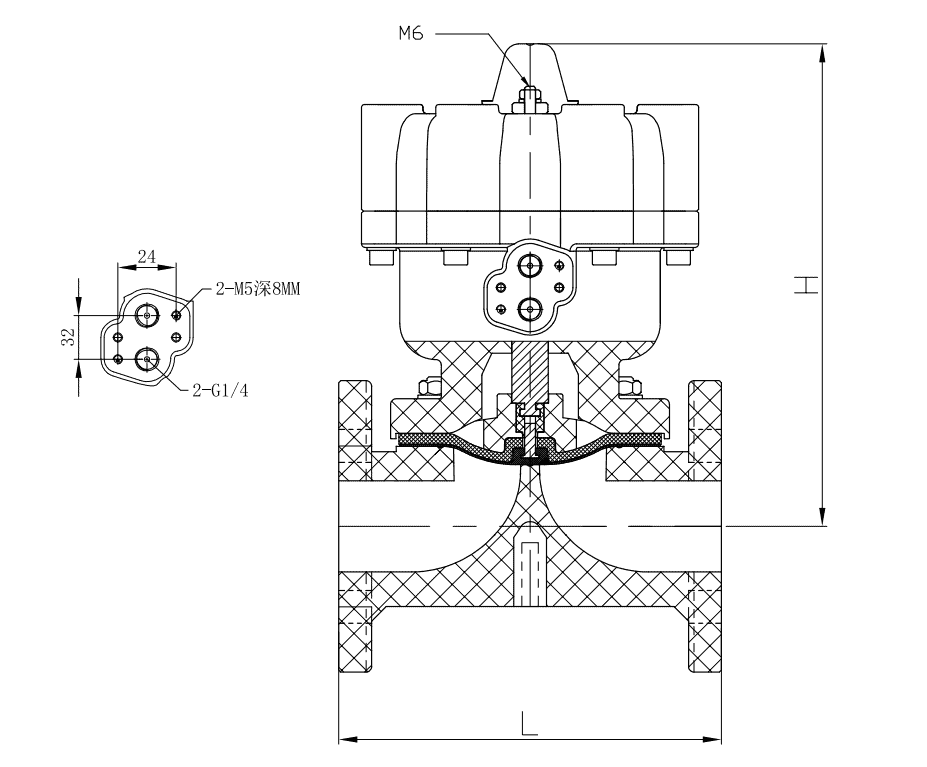
Pneumatic Diaphragm Valve — Dimensions (mm) 气动隔膜阀 产品尺寸表
| DN (mm) | 15 | 20 | 25 | 32 | 40 | 50 | 65 | 80 | 100# | |
|---|---|---|---|---|---|---|---|---|---|---|
| H | 157 | 160 | 163 | 165 | 260 | 265 | 380 | 395 | 441 | |
| L | HG | 125 | 135 | 145 | 160 | 180 | 210 | 250 | 300 | 350 |
| DIN | 130 | 150 | 160 | 180 | 200 | 230 | 290* | 310 | 350 | |
| JIS | 110 | 120 | 130 | 142* | 180 | 210 | 250 | 280 | 340 | |
| ANSI | 110/108 | 120/150 | 130/150 | 160 | 180/176 | 210/202 | 250 | 280/264* | 340/329* | |
H = overall height; L = face-to-face length per flange standard (HG / DIN / JIS / ANSI). # DN100 uses a plastic pneumatic actuator — media pressure must not exceed 0.6 MPa. * non-standard dimension. A “/” in the ANSI row shows two reference face-to-face values. For more sizes, see the flanged diaphragm valve page.
Pneumatic Actuator — Parameters 执行器参数表
| DN (mm) | 15 | 20 | 25 | 32 | 40 | 50 | 65 | 80 | 100 | |
|---|---|---|---|---|---|---|---|---|---|---|
| Operating pressure (MPa) | 0.4–0.6 | |||||||||
| Air consumptionNL per open & close | Double acting0.4 MPa air | 1.25 | 1.25 | 1.29 | 1.29 | 4.35 | 4.8 | 23.8 | 24.5 | 26.1 |
| Air to open / NC0.5 MPa air | 0.55 | 0.55 | 0.59 | 0.59 | 2.08 | 2.37 | 9.2 | 9.8 | 11.6 | |
| Air to close / NO0.4 MPa air | 0.75 | 0.75 | 0.79 | 0.79 | 2.63 | 2.82 | 8.4 | 8.7 | 12 | |
| Air supply bore | RC 1/4 | |||||||||
Air consumption is per open/close cycle (NL). NC = single-acting, spring-return, normally closed (air opens). NO = single-acting, spring-return, normally open (air closes).
Convert sizes: DN to inch pipe size chart
Typical applications
CPVC diaphragm valves are specified for hot acidic and oxidising duty: hydrometallurgy and copper-ore acidic leach (acid transfer lines), electroplating and metal-finishing hot acid pickling lines, and chlor-alkali and bleach wastewater systems. To weigh CPVC against the other thermoplastics, see our plastic valve material selection guide. See also our CPVC butterfly valve and CPVC ball valve.
Other diaphragm valve materials: UPVC (ambient water, value choice), PPH (strong caustic and alkalis) and PVDF (aggressive acids, HF and high purity). Browse the full range of plastic diaphragm valves.
Proven in the field: see how our CPVC valves cut installation cost 38% at an Indonesian copper smelter.
Learn how diaphragm valves handle hot acids and oxidising media in our guide to diaphragm valves, understand weir vs straight-through designs, and compare diaphragm materials to match your medium.
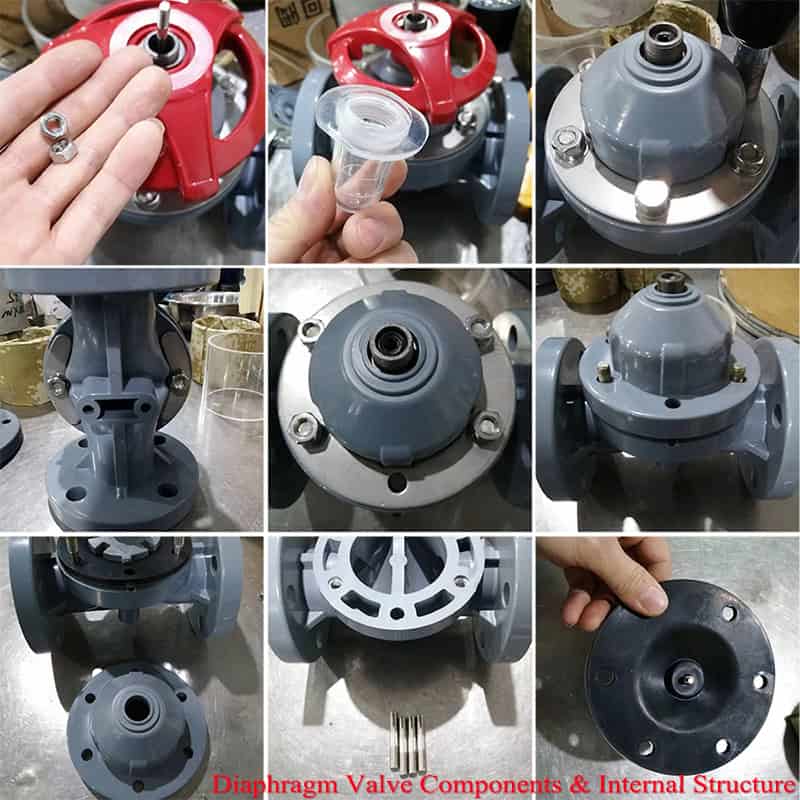
Why buy CPVC diaphragm valves from Huiya
Our CPVC diaphragm valves are built for hot acidic and oxidising duty, supplied factory-direct — so you get the right configuration, competitive pricing, and a fast reply with no trading-company markup.
- ✅ Factory-direct — our own 2,000+ m² plant in Zhejiang, no middleman
- ✅ 100% virgin branded resin, fully traceable; produced at an ISO 9001-certified facility; material test reports on request
- ✅ Low MOQ — 20 pieces; samples available; OEM / custom welcome
- ✅ Fast lead time — about 7 days standard, 14 days custom
- ✅ 12-month warranty
Or explore our full range of CPVC valves.
Get a factory-direct quote
Send us your medium, its concentration and temperature, and the line size. Our engineers confirm the right body material, seat and valve type — and reply within 24 hours.
Frequently asked questions
What is a CPVC diaphragm valve used for? CPVC diaphragm valves are used for hot corrosive and oxidising service to about 90 °C — hot water, dilute-to-moderate acids, and bleach — in hydrometallurgy and copper leach, electroplating and metal-finishing pickling lines, and chlor-alkali and bleach wastewater systems.
What temperature can a CPVC diaphragm valve handle? The CPVC body is rated to about 90 °C — its main advantage over UPVC, which is limited to roughly 55 °C. Allowable pressure falls as temperature rises, so confirm the pressure–temperature point for your duty.
Is CPVC suitable for sulfuric acid and hot acid pickling? Yes. CPVC handles sulfuric acid in the approximate 10–80% range, dilute hydrochloric and phosphoric acids, sodium hypochlorite, and chlorine water, which makes it well suited to hot acid pickling and copper leach lines. It is not recommended for fuming sulfuric acid, concentrated nitric acid, or aromatic and chlorinated solvents.
CPVC or UPVC — which should I choose? Choose CPVC when the line runs hot or carries hot acids; it keeps its strength and pressure rating where UPVC softens. Choose UPVC for ambient-temperature water and mild chemical service where its lower cost is the priority.
CPVC or PVDF — which one? Choose CPVC as the cost-effective option for hot acidic duty within its temperature and chemical range. Step up to PVDF for the most aggressive media — concentrated acids, hydrofluoric acid, halogens — and for ultrapure applications.
Can a CPVC diaphragm valve be pneumatically actuated? Yes. We offer a pneumatic CPVC diaphragm valve with a corrosion-resistant all-plastic actuator in double-acting or spring-return action, with optional solenoid valve, limit switch, positioner, and air filter regulator.
What sizes, pressure rating, and minimum order apply? Sizes run from DN15 to DN150 (1/2″–6″), rated PN10, with a minimum order of 20 pieces and OEM/custom configurations available. Send us your media and conditions for a quotation.