
PVDF chemical resistance is the main reason engineers reach for this fluoropolymer when other plastics fail. PVDF — polyvinylidene fluoride, sold as Kynar® and Solef® — resists most strong acids, halogens, and oxidizers across a wide temperature range, which makes it the workhorse of aggressive-chemical and high-purity service. This guide covers what PVDF resists, where its limits are, and how concentration and temperature change the answer, so you can match it to your media with confidence.
The ratings here are a general guide. Actual service conditions — concentration, temperature, pressure, impurities, and mixed media — all affect the result, so confirm the rating for your exact duty before you specify.
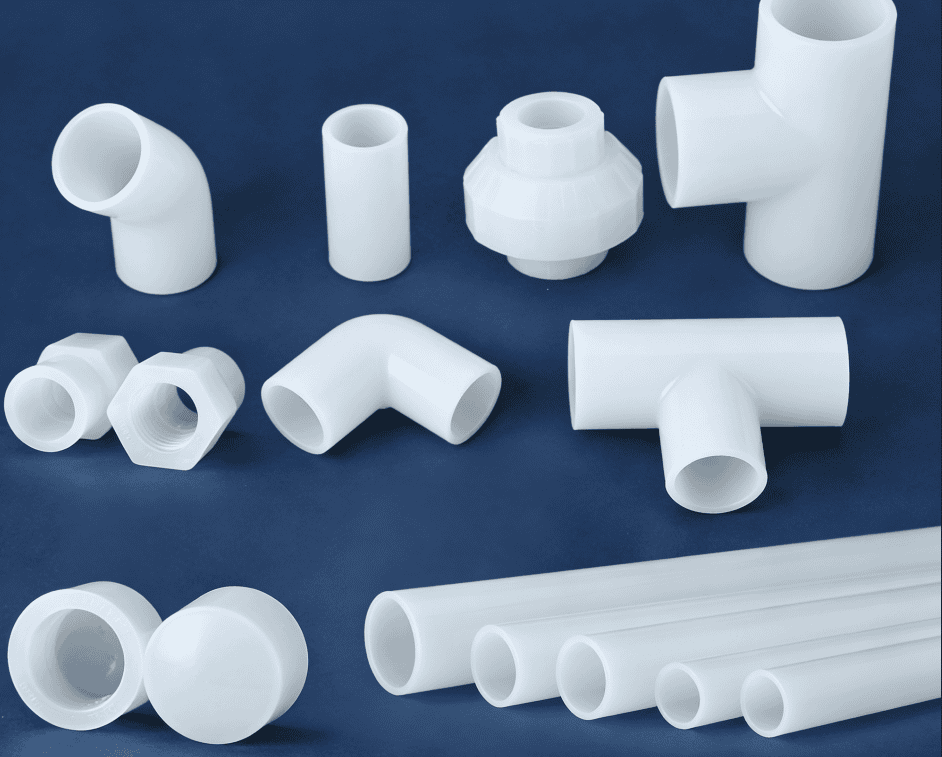
Why PVDF is so chemically resistant
PVDF is a semi-crystalline fluoropolymer built on strong carbon–fluorine bonds. That backbone is what gives the polymer its inertness: it shrugs off oxidation and acid attack that degrade ordinary plastics. In its virgin form PVDF contains no plasticizers, fillers, or stabilizers, so there is nothing in the compound for a chemical to leach or attack — which is also why it is favoured for ultrapure water and electronic-grade chemicals. Just as important, PVDF keeps this resistance while staying mechanically strong and serviceable to about 120 °C, a combination few thermoplastics can match.
One caveat worth stating up front: chemical compatibility data assumes 100% virgin resin. Regrind or filled compounds do not perform the same way, so the resin grade behind the valve matters as much as the chart.
PVDF chemical compatibility chart
The table summarises ratings for common aggressive media — ◎ excellent, ○ limited, × not recommended — and shows how they shift with temperature.
| Media | PVDF rating (by temperature) |
|---|---|
| Acids | |
| Hydrochloric acid 35% | ◎ 20–100 °C (○ at 120 °C) |
| Sulfuric acid 50% | ◎ 20–120 °C |
| Sulfuric acid 98% | ◎ 20–40 °C; ○ 60–80 °C; × at ≥ 100 °C |
| Nitric acid 30% | ◎ 20–100 °C |
| Nitric acid 70% | ◎ to ~60 °C; × when hot |
| Phosphoric acid 50% | ◎ 20–80 °C |
| Hydrofluoric acid 40–55% | ◎ 20–80 °C |
| Alkalis | |
| Sodium hydroxide 50% | ◎ 20 °C only; ○ / × when hot — PVDF’s main inorganic weak spot |
| Oxidizers & halogens | |
| Chlorine gas (wet / dry) & chlorine water | ◎ 20–120 °C |
| Hydrogen peroxide 35% | ◎ 20–120 °C |
| Hydrogen peroxide 50% | ◎ 20–80 °C |
| Sodium hypochlorite 10% | ◎ 20–40 °C (from your checker; PVDF usually holds bleach higher — reconfirm) |
| Potassium permanganate | ◎ 20–100 °C (estimate — not on current chart, confirm) |
| Solvents | |
| Acetone (concentrated) | × at 20 °C (only dilute aqueous tolerated) |
| Methanol | ◎ 20–60 °C (estimate — confirm) |
| Toluene | ◎ 20–40 °C |
| Butyl acetate | ◎ 20 °C; ○ 40 °C; × at ≥ 60 °C |
| Tetrahydrofuran (THF) | ○ 20 °C; × at ≥ 40 °C |
| Aniline | ◎ 20 °C; ○ 40–80 °C; × at 100 °C |
Need a chemical that’s not in the table above? Look it up in our plastic valve chemical resistance checker — 200+ media rated for UPVC, CPVC, PPH, PVDF and PTFE across temperature.
The pattern is the point: halogens and most mineral acids stay strong across a wide band, concentrated sulfuric acid narrows as it gets hot, and the organic solvents — ketones and ethers above all — are where PVDF reaches its limit. Note too how the same acid behaves very differently by concentration: sulfuric is excellent to 120 °C at 50%, but only to about 40 °C at full 98% strength.
Chemical resistance tells you whether the plastic holds up — but a valve’s PN10 / 120 °C envelope and its seal often set the real service limit. For that step, see how to choose the right PVDF valve by media, temperature and valve type.What PVDF resists well
PVDF acid resistance is its headline strength. It handles hydrochloric and phosphoric acids and most other mineral acids that would attack PVC, CPVC, or polypropylene, and it takes sulfuric acid across the full concentration range — excellent to high temperature when dilute, and to moderate temperature at full 98% strength. It is also one of the best plastics for hydrofluoric acid, and it is excellent with halogens — wet or dry chlorine and bromine — and with oxidizers such as hydrogen peroxide within the ratings above. Beyond acids, PVDF chemical resistance extends to most inorganic salt solutions, aliphatic hydrocarbons, alcohols, and weak bases. Combined with its near-zero leaching, that is why PVDF dominates semiconductor ultrapure-water systems and high-purity chemical lines.
Where PVDF is limited or not recommended
No plastic is universal, and PVDF has three clear weak spots:
- Strong, hot caustic and concentrated alkalis. Concentrated sodium or potassium hydroxide — especially hot — attacks PVDF over time. This is its main inorganic limitation, and it is exactly where polypropylene (PPH) is the better material. For caustic and brine duty, see our PPH valves.
- Fuming and strongly oxidizing acids. Fuming sulfuric acid (oleum) is not recommended at any temperature, and concentrated nitric acid turns aggressive as it gets hot — 70% nitric is fine to about 60 °C but not at 100 °C. Aqua regia is borderline: charts can show PVDF holding it at ambient temperature, but as a powerful oxidizer it warrants testing under your real conditions before you rely on it. For any of these, verify carefully or step up to a PTFE-lined solution.
- Some organic solvents. Ketones and ethers are PVDF’s classic weak spot: concentrated acetone is not recommended even cold, and THF is only marginally tolerated at room temperature before failing by 40 °C. Esters such as butyl acetate are fine cold but fail as the line warms, while aromatic amines like aniline are more forgiving — PVDF holds them to about 80 °C before failing hot. Always check the specific solvent, its concentration, and temperature.
Temperature and concentration change everything
The single most important habit when reading any PVDF chemical compatibility chart is to read the temperature alongside the rating. A “compatible” result is conditional: many media are ◎ at ambient but slip to ○ or × near the top of PVDF’s roughly 120 °C range, and higher concentration usually narrows the window further. Pressure follows the same rule — the allowable PN rating derates as temperature climbs. So the right question is never “is PVDF compatible with X?” but “is PVDF compatible with X, at my concentration and my temperature?”
It is not just the polymer: seats, seals, and stress
A valve is more than its body. On a PVDF ball valve the PTFE seat matches the polymer’s chemical range, but on a PVDF butterfly valve the seat is an elastomer — EPDM or FKM — and that seat, not the PVDF, often sets the real limit. Always confirm the wetted seal as well as the body. Two more points the charts cannot show: compatibility data comes from unstressed immersion tests, so under constant pressure, thermal cycling, or combined and impure media the behaviour can differ (stress cracking is the classic example). For critical or borderline service, test under real operating conditions before committing.
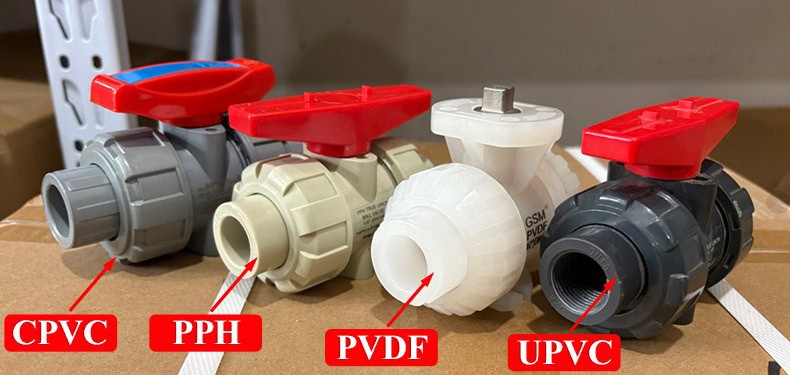
PVDF compared with CPVC, PP, and PVC
PVDF covers the widest and most aggressive chemical range and the highest temperature, which is why it costs more. CPVC is the cost-effective choice for hot acidic duty within its range; PPH is the best value for strong caustic and alkalis; and UPVC/PVC suits ambient water and mild chemicals. To weigh all four side by side, see our plastic valve material selection guide and our chemical resistance reference.
PVDF and its cousins are workhorses in treatment plants — for material choice across disinfection, dosing, and desalination, see our water treatment and dosing applications.PVDF chemical resistance FAQ
Is PVDF compatible with sodium hypochlorite (bleach)?
Yes. PVDF resists sodium hypochlorite, which is why it is a standard material for bleach dosing and disinfection lines. As with any oxidizer, confirm the rating for your concentration and temperature.
Does PVDF resist potassium permanganate?
Yes. PVDF is fully resistant to potassium permanganate up to 100 °C — well beyond polypropylene and PVC, which are only conditionally resistant to about 60 °C and fail by 80 °C. Because PVDF valves are rated to 120 °C, permanganate stays within their full service range.
What is the maximum temperature for PVDF?
PVDF valves and pipe are mechanically serviceable to about 120 °C. That is the mechanical ceiling — the chemical rating for a given medium often derates below it, so always read the temperature alongside the compatibility rating.
Does PVDF resist hydrofluoric acid (HF)?
Yes — PVDF is one of the few plastics that handles HF, along with PTFE, which is why it is specified for hydrofluoric acid and fluoride service. See our HF valve guide for details.
What chemicals attack PVDF?
PVDF has three main weak spots: strong hot caustic (concentrated sodium or potassium hydroxide), fuming and strongly oxidizing acids (oleum and hot concentrated nitric), and some organic solvents — ketones and ethers such as acetone and THF. For hot caustic duty, PPH is the better material.
Is PVDF the same as Kynar?
Yes. Kynar® (Arkema) and Solef® (Solvay) are brand names for PVDF — polyvinylidene fluoride — the same polymer.
PVDF or CPVC — which should I use for hot acid?
CPVC is the cost-effective choice for hot acidic duty within its range; step up to PVDF for the most concentrated or oxidizing acids and the highest temperatures. See our PVDF vs PTFE vs CPVC guide.
How we help
We build our PVDF valves from 100% virgin Kynar® or Solef® resin — no regrind, no fillers — so the compatibility you look up is the compatibility you get. Tell us your media, concentration, and temperature, and our engineers will confirm the right material, seat, and configuration, and flag any borderline conditions before they become a problem.
Get a PVDF recommendation
Explore our PVDF range — diaphragm valves, ball valves, and butterfly valves, or the full line of PVDF valves. When you are ready, request a quote with your media and operating conditions and we will reply within 24 hours.