
Huiya CPVC valves handle hot, corrosive media that ordinary plastics cannot — rated up to 100°C for hot acids, chlorinated water and chemical processing lines. CPVC (chlorinated polyvinyl chloride) is the proven choice for sulfuric-acid service in copper heap leaching and for chlorine-dosed water treatment. The range below covers pneumatic true-union ball valves, flanged ball valves and butterfly valves, all built to ANSI, DIN and JIS standards and supplied factory-direct. Matching CPVC pipes and fittings are available, so the complete line comes from one source. Compared with PVDF, CPVC delivers high-temperature acid resistance at a fraction of the cost— see how to choose the right valve material. — send us your media, concentration and temperature and our engineers will confirm the right fit.
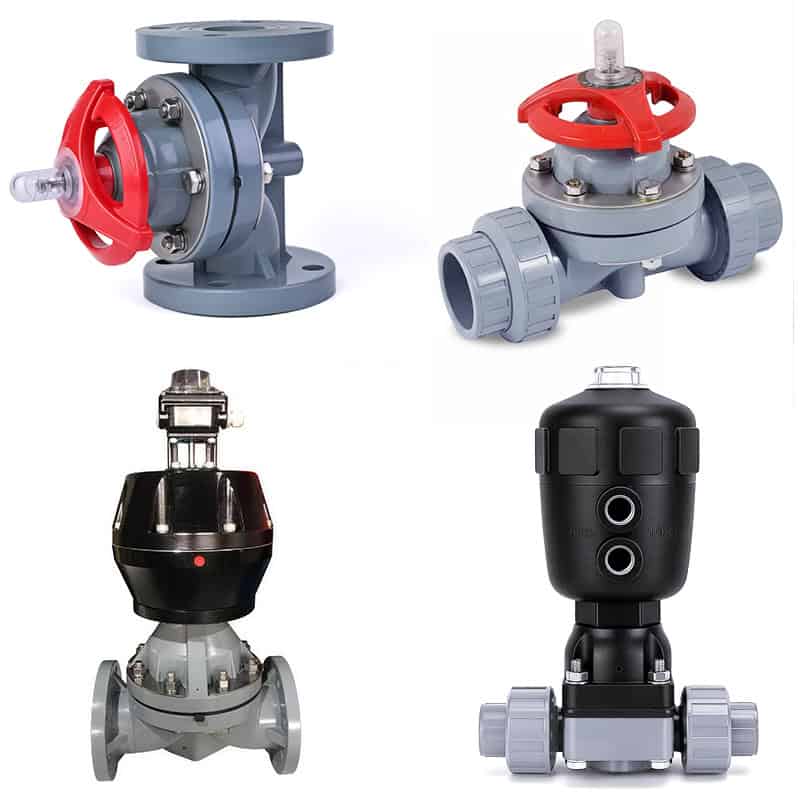
CPVC Diaphragm Valve
CPVC diaphragm valves bridge the gap between general-purpose UPVC and high-end PVDF: they hold up…
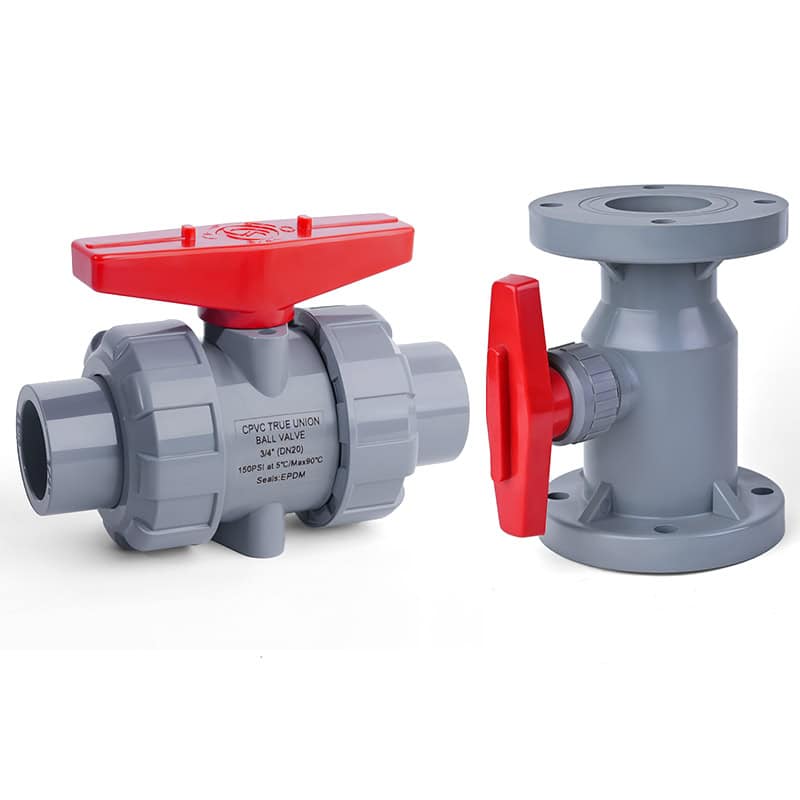
Industrial CPVC Ball Valve (Manual)
Industrial CPVC Ball Valve (Manual) Industrial CPVC ball valves give you quarter-turn on/off control of…
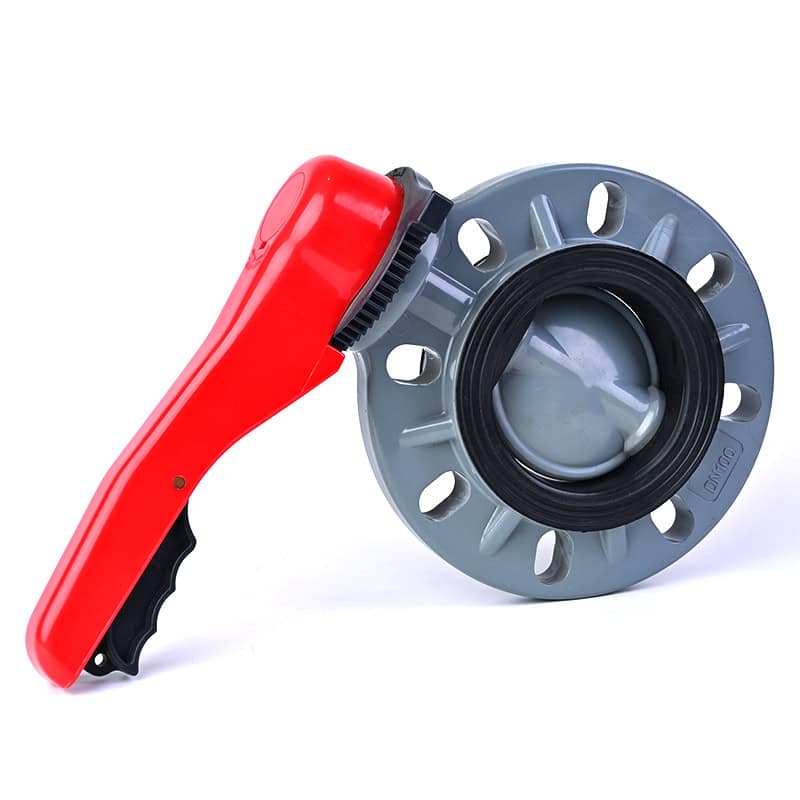
CPVC Butterfly Valve (C-PVC)
CPVC Butterfly Valve (C-PVC) CPVC butterfly valves (C-PVC) give you compact, quarter-turn control of large-bore…
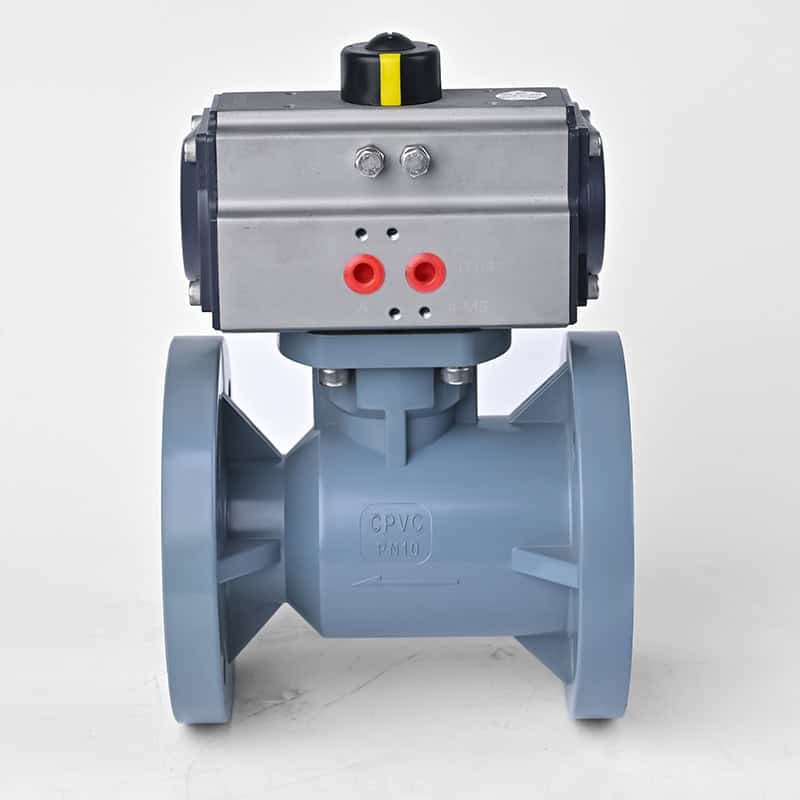
CPVC Flanged Pneumatic Ball Valve
CPVC Flanged Pneumatic Ball Valve The Huiya CPVC flanged pneumatic ball valve is a large-bore…
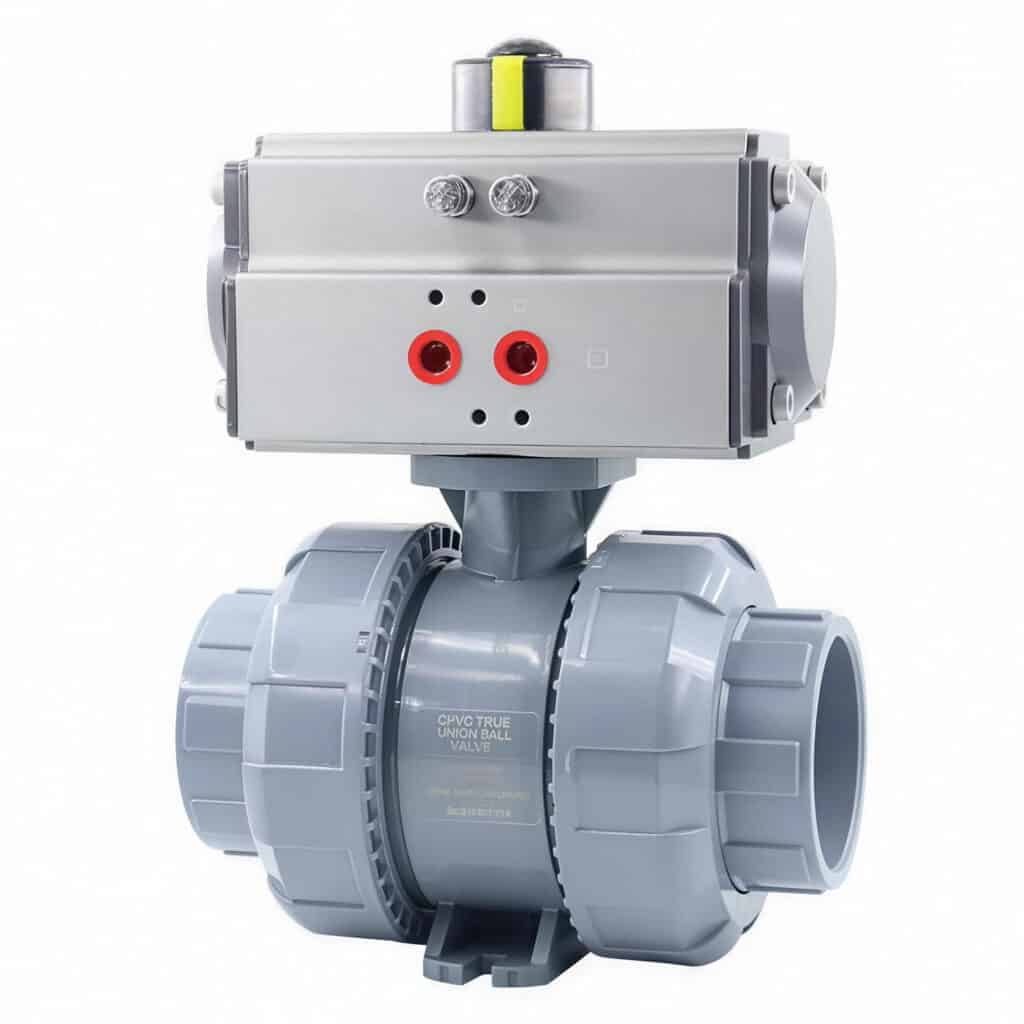
CPVC Pneumatic True Union Ball Valve
The Huiya CPVC pneumatic true union ball valve is a true union, two-piece automated valve…
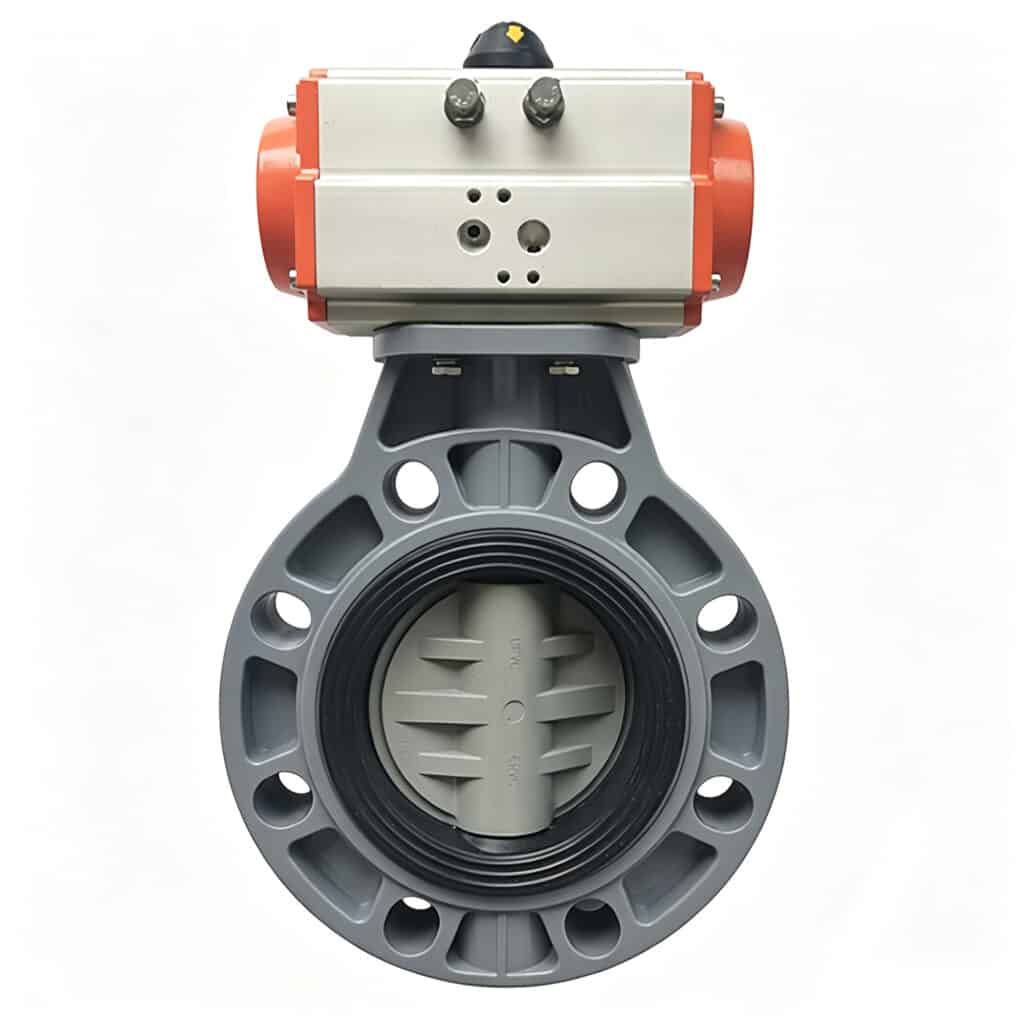
CPVC Pneumatic Butterfly Valve
CPVC Pneumatic Butterfly Valve The Huiya CPVC pneumatic butterfly valve delivers automated on/off control for…
CPVC Valves — Frequently Asked Questions
Can CPVC valves handle sulfuric acid?
Yes. CPVC is widely used for dilute and moderately concentrated sulfuric acid at elevated temperatures, which is why it is the standard choice for copper heap-leaching lines in mining. For very high concentrations such as 98% sulfuric, step up to PVDF. Send us your acid concentration and temperature and we will confirm CPVC is suitable.
CPVC or PVDF — when is CPVC enough?
CPVC handles hot acids and chlorinated water up to 100°C at a fraction of PVDF’s cost. Choose CPVC when your media is hot but not extreme; reserve PVDF for concentrated acids, solvents and service above 100°C. For most hot-acid and water-treatment duty, CPVC is the better-value option.
What is the maximum temperature for CPVC valves?
CPVC valves are rated for continuous service up to about 100°C — well above UPVC‘s 55°C limit. Pressure rating drops as temperature rises, so share your working pressure along with the temperature and we will confirm the correct rating for your line.