
UPVC / PVC Butterfly Valve
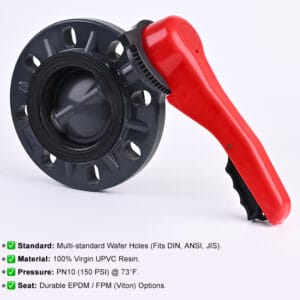
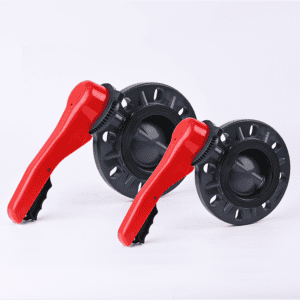
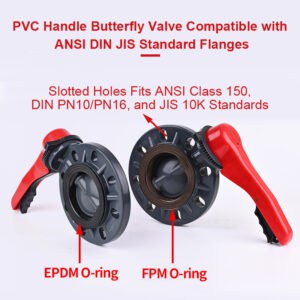
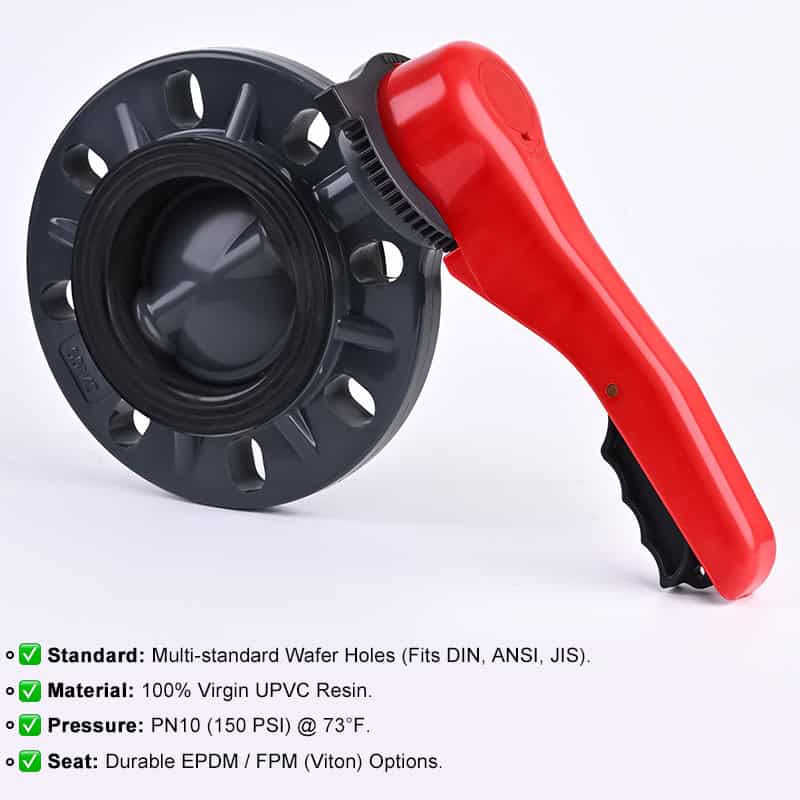
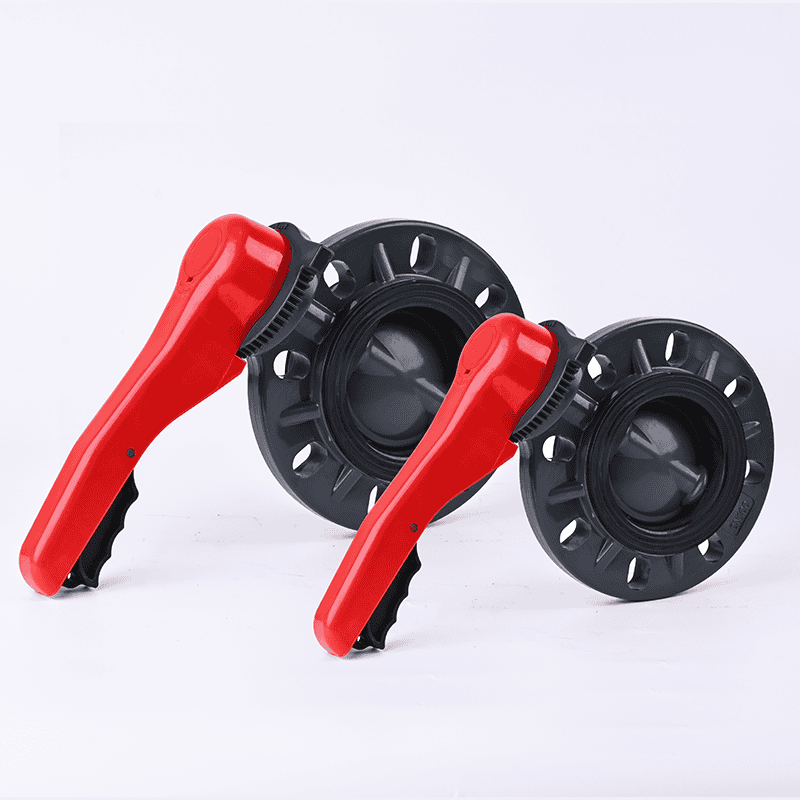
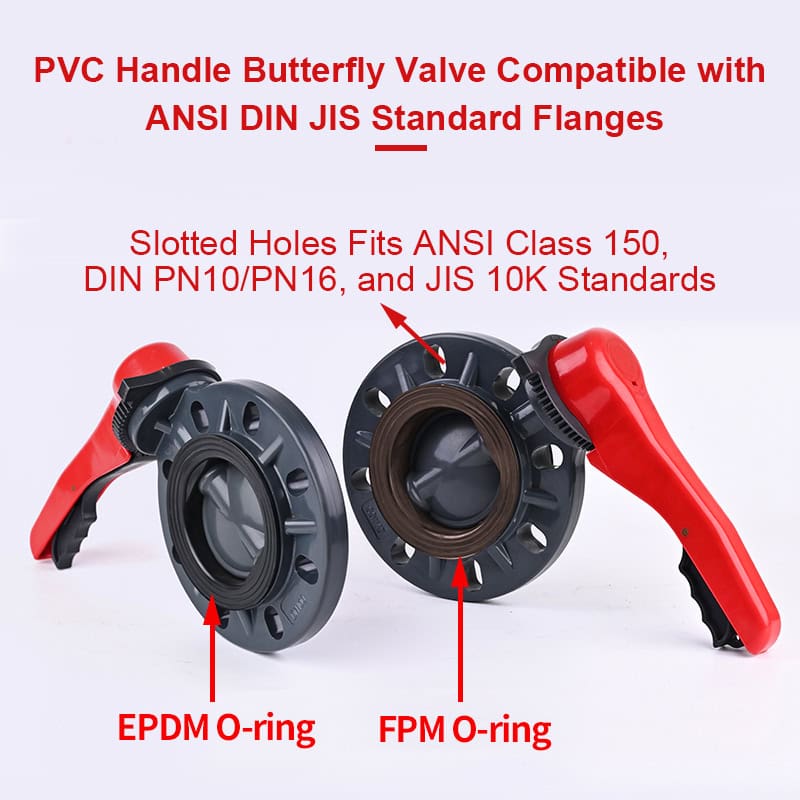
UPVC butterfly valves — also known as PVC butterfly valves — give you compact, quarter-turn control of large-bore water and mild-chemical lines, DN50 to DN500, in wafer and lug bodies with a UPVC disc and an EPDM or FKM seat. They are the space-saving, economical choice for big-flow isolation and throttling in water treatment, desalination, and cooling systems.
A butterfly valve seals with a disc that rotates a quarter turn inside an elastomer-lined body, so it is light, short face-to-face, and well suited to large diameters. On our valves the disc is moulded in the same virgin UPVC (unplasticized PVC) as the body, and the stem is 304 or 316 stainless steel.
UPVC (PVC) chemical compatibility (seat-dependent)
UPVC — the rigid, unplasticized form of PVC — is rated to about 55 °C and suits ambient-temperature water and mildly corrosive media. On a butterfly valve the seat is an elastomer (EPDM or FKM) that contacts the media, so the seat sets the chemical limit alongside the UPVC body and disc.
UPVC butterfly valves suit large-bore industrial water, seawater and high-salinity media, reverse-osmosis lines, and weak acids and alkalis. For strong oxidising acids or hotter service, choose CPVC, and for the most aggressive media use a PTFE-seated ball or diaphragm valve. See our chemical resistance reference for more.
Wafer or lug?
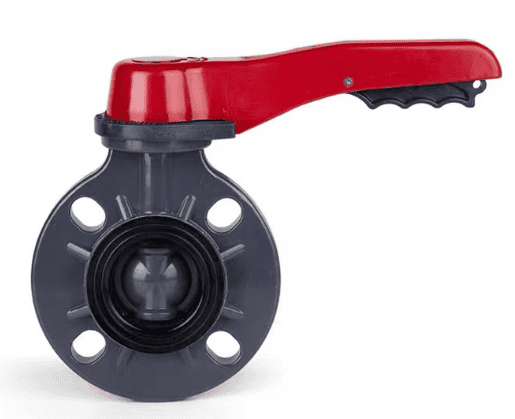
Wafer valves are clamped between two pipe flanges by bolts that pass around the body — the most economical and lightest option. Both flanges must stay in place, so a wafer valve cannot dead-end a line or isolate one side while you remove downstream piping.
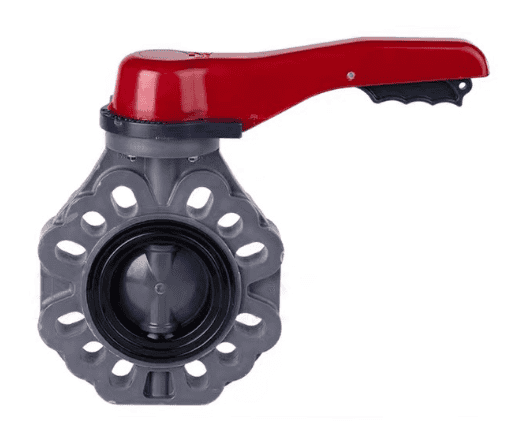
Lug valves have threaded lug holes so each flange bolts directly to the valve body. The valve can be installed or removed from one side and used for dead-end service and end-of-line isolation, letting you service downstream piping while the upstream stays in operation (at a reduced dead-end pressure rating).
Full comparison: wafer vs lug butterfly valve
Operation
Sizes DN50–DN200 use a lever with a notched lock plate that sets the disc in 5° increments for repeatable throttling. Sizes DN250–DN500 use a worm-gear handwheel for easy operation at large bore; the gear operator is also available on smaller sizes for fine control.
Why our UPVC / PVC butterfly valves
- Improved seat design for excellent, reliable sealing.
- Thickened body with reinforcing ribs and no hollow sections, engineered against stress concentration for strength on large-bore lines.
- Precise 5° opening control from the lever lock plate, for repeatable throttling.
- UPVC disc in the same virgin resin as the body; 304 or 316 stainless steel stem; EPDM or FKM seat selected to your media.
- Virgin branded resin and factory-direct supply.
Configurations and specifications
| Body / disc material | UPVC (unplasticized PVC); disc same as body; virgin branded resin |
| Body style | Wafer or lug |
| Size range | DN50–DN500 |
| Pressure rating | PN10 (derates with temperature) |
| Max temperature | ~55 °C (seat may limit) |
| Seat | EPDM or FKM |
| Stem | 304 or 316 stainless steel |
| Flange compatibility | ANSI Class 150 / DIN / JIS |
| Operation | Lever (DN50–DN200) / worm gear (DN250–DN500) |
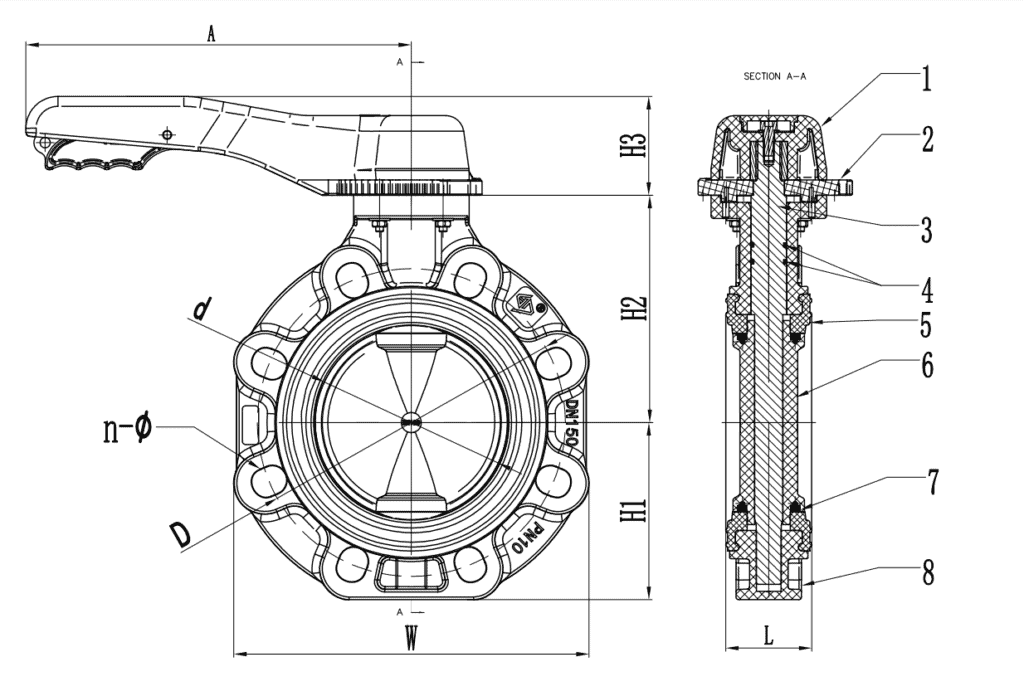
| No. | Parts | Materials |
|---|---|---|
| 1 | Handle | ABS, PPG, EL-PP |
| 2 | Locking Plate | PPG, FRPP |
| 3 | Stem | Steel, Stainless Steel, Titanium Alloy, Hastelloy |
| 4 | O-ring | EPDM, FPM, FFKM |
| 5 | Seat | EPDM, FPM |
| 6 | Disc | UPVC |
| 7 | Sealing Gasket | PTFE, EPDM, FPM, FFKM |
| 8 | Body | UPVC |
Dimensions
Lever-Operated Butterfly Valve — Dimensions (mm)
| DN | d | D (flange O.D.) | L | n (bolt holes) | W | H1 | H2 | H3 | A | ||||
|---|---|---|---|---|---|---|---|---|---|---|---|---|---|
| GB/DIN | JIS | ANSI | GB/DIN | JIS | ANSI | ||||||||
| 25 | 35 | 85 | 90 | 79 | 37 | 4 | 4 | 4 | 125 | 72 | – | 56 | 220 |
| 32 | 35 | 100 | 100 | 89 | 37 | 4 | 4 | 4 | 125 | 72 | – | 56 | 220 |
| 40 | 47 | 110 | 105 | 98 | 38 | 4 | 4 | 4 | 150 | 86 | – | 56 | 220 |
| 50 | 56 | 125 | 120 | 121 | 40 | 4 | 4 | 4 | 160 | 80 | 108 | 56 | 220 |
| 65 | 70 | 145 | 140 | 140 | 45 | 4 | 4 | 4 | 175 | 88 | 118 | 56 | 220 |
| 80 | 80 | 160 | 150 | 152 | 47 | 8 | 8 | 4 | 195 | 98 | 130 | 75 | 250 |
| 100 | 100 | 180 | 175 | 190 | 56 | 8 | 8 | 8 | 225 | 112 | 145 | 75 | 250 |
| 125 | 125 | 210 | 210 | 216 | 62 | 8 | 8 | 8 | 253 | 126 | 162 | 77 | 300 |
| 150 | 150 | 240 | 240 | 241 | 67 | 8 | 8 | 8 | 277 | 138 | 177 | 77 | 300 |
| 200 | 200 | 295 | 290 | 298 | 86 | 8 | 12 | 8 | 330 | 165 | 210 | 77 | 300/400 |
All dimensions in mm. Body rating PN10 (1.0 MPa) across all sizes. D = flange outside diameter to GB/DIN, JIS or ANSI drilling; L = face-to-face length; n = number of bolt holes. W, H1, H2, H3 and A refer to the dimension drawing.
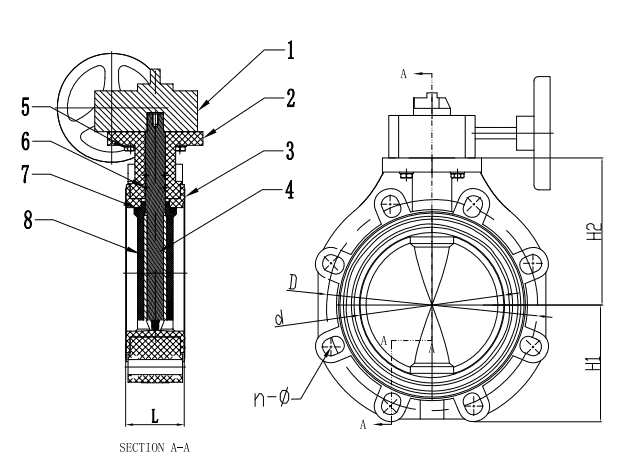
| No. | Parts | Materials |
|---|---|---|
| 1 | Handle | ABS, PPG, EL-PP |
| 2 | Locking Plate | PPG, FRPP |
| 3 | Stem | Steel, Stainless Steel, Titanium Alloy, Hastelloy |
| 4 | O-ring | EPDM, FPM, FFKM |
| 5 | Seat | EPDM, FPM |
| 6 | Disc | UPVC |
| 7 | Sealing Gasket | PTFE, EPDM, FPM, FFKM |
| 8 | Body | UPVC |
Dimensions
Gear-Operated (Worm Gear) Butterfly Valve — Dimensions (mm)
| DN | d | D (flange O.D.) | L | n (bolt holes) | H1 | H2 | ||||
|---|---|---|---|---|---|---|---|---|---|---|
| GB/DIN | JIS | ANSI | GB/DIN | JIS | ANSI | |||||
| 80 | 80 | 160 | 150 | 152 | 47 | 8 | 8 | 4 | 98 | 130 |
| 100 | 100 | 180 | 175 | 190 | 56 | 8 | 8 | 8 | 112 | 145 |
| 125 | 125 | 210 | 210 | 216 | 62 | 8 | 8 | 8 | 126 | 162 |
| 150 | 150 | 240 | 240 | 241 | 67 | 8 | 8 | 8 | 138 | 177 |
| 200 | 200 | 295 | 290 | 298 | 86 | 8 | 12 | 8 | 165 | 210 |
| 250 | 250 | 350 | 355 | 362 | 105 | 12 | 12 | 12 | 204 | 260 |
| 300 | 307 | 400 | 400 | 432 | 120 | 12 | 16* | 12 | 238 | 270 |
| 350 | 358 | 460 | 445 | 476 | 130 | 16 | 16 | 12* | 266 | 300 |
| 400 | 389 | 515 | 510 | 540 | 140 | 16 | 16 | 16 | 308 | 350 |
| 450 | 446 | 565 | 565 | 578 | 152 | 20 | 20 | 16* | 320 | 370 |
| 500 | 494 | 620 | 620 | 635 | 155 | 20 | 20 | 20 | 345 | 400 |
| 600 | 590 | 725 | 730 | 749 | 175 | 20 | 24* | 20 | 405 | 460 |
All dimensions in mm. Body rating PN10 (1.0 MPa) across all sizes. D = flange outside diameter to GB/DIN, JIS or ANSI drilling; L = face-to-face length; n = number of bolt holes; H1, H2 = heights per the drawing. * non-standard drilling — please confirm the bolt pattern when ordering.
Convert sizes: DN to inch pipe size chart
Typical applications
UPVC (PVC) butterfly valves suit large-bore water and light-chemical duty: water-treatment and distribution mains, seawater desalination and reverse-osmosis lines, cooling-water systems, and weak acid or alkali headers. To weigh UPVC against the other thermoplastics, see our plastic valve material selection guide.
See also our UPVC ball valve and UPVC diaphragm valve.
Why buy UPVC / PVC butterfly valves from Huiya
Our UPVC / PVC butterfly valves are built for large-bore water, seawater, and RO lines, supplied factory-direct — so you get the right configuration, competitive pricing, and a fast reply with no trading-company markup.
- ✅ Factory-direct — our own 2,000+ m² plant in Zhejiang, no middleman
- ✅ 100% virgin branded resin, fully traceable; produced at an ISO 9001-certified facility; material test reports on request
- ✅ Low MOQ — 20 pieces; samples available; OEM / custom welcome
- ✅ Fast lead time — about 7 days standard, 14 days custom
- ✅ 12-month warranty
Get a factory-direct quote
Send us your medium, its concentration and temperature, and the line size. Our engineers confirm the right body material, seat and valve type — and reply within 24 hours.
Frequently asked questions
Is a UPVC butterfly valve the same as a PVC butterfly valve?
In practice, yes. UPVC stands for unplasticized PVC — the rigid form of PVC used for pressure pipe and valves — so “UPVC butterfly valve” and “PVC butterfly valve” refer to the same rigid PVC valve.
What is a UPVC (PVC) butterfly valve used for?
UPVC butterfly valves provide compact quarter-turn isolation and throttling of large-bore water and mild-chemical lines — water-treatment mains, desalination and RO lines, and cooling water — from DN50 to DN500.
What temperature and chemicals can a UPVC butterfly valve handle?
UPVC is rated to about 55 °C, with the elastomer seat (EPDM or FKM) setting the chemical limit on a butterfly valve. For hotter service choose CPVC (to ~90 °C); for the most aggressive media use a PTFE-seated ball or diaphragm valve.
Should I choose a wafer or lug UPVC butterfly valve?
Choose wafer for an economical valve clamped between two flanges in a continuous line. Choose lug when you need dead-end service or end-of-line isolation, so downstream piping can be removed while the upstream stays in operation.
What sizes and operation are available?
Sizes run DN50–DN500 at PN10. DN50–DN200 use a lever with 5° throttling increments; DN250–DN500 use a worm-gear handwheel, also available on smaller sizes.
Can a UPVC butterfly valve be pneumatically actuated?
Yes. For automated isolation on large lines, use our UPVC pneumatic butterfly valve with a corrosion-resistant actuator.