
Wafer vs Lug Butterfly Valve: Which to Choose (UPVC, CPVC, PPH & PVDF)
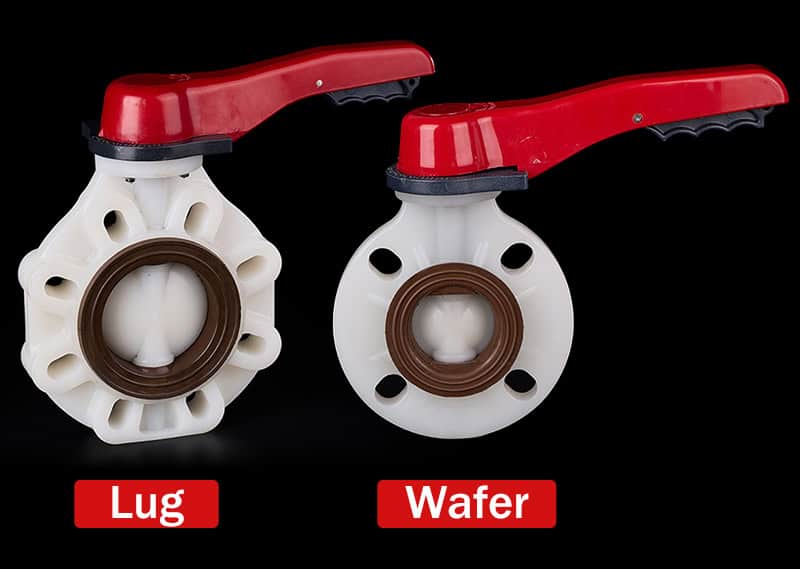
A wafer butterfly valve is clamped between two pipe flanges; a lug butterfly valve has threaded lugs so each flange bolts to it independently. The practical difference comes down to one thing: a lug valve can be used for dead-end (end-of-line) service — you can remove the downstream piping while the valve still holds pressure — and a wafer valve cannot. Almost everything else, from cost to weight to where each one belongs, follows from that single point.
This guide explains how each connection works, how to choose between them, and how the decision plays out in plastic, corrosion-resistant butterfly valves — UPVC, CPVC, PPH and PVDF — where the body material and the seat matter just as much as the connection style.
Wafer vs lug butterfly valve at a glance
| Feature | Wafer butterfly valve | Lug butterfly valve |
|---|---|---|
| How it connects | Clamped (sandwiched) between two flanges; bolts pass around the body | Threaded lugs; each flange bolts directly to the valve body |
| Dead-end / end-of-line service | No — removing either pipe releases the valve | Yes — at a reduced dead-end pressure rating |
| Service one side without draining the line | No — the whole line must be shut and both pipes loosened | Yes — remove downstream piping while upstream stays in service |
| Bolting | One set of through-bolts | Two independent sets of bolts |
| Weight & size | Lighter, most compact | Heavier, more material |
| Relative cost | Lower | Higher |
| Best for | Continuous in-line runs, large-bore water, cost-sensitive projects | Terminal valves, equipment isolation, maintenance-heavy systems |
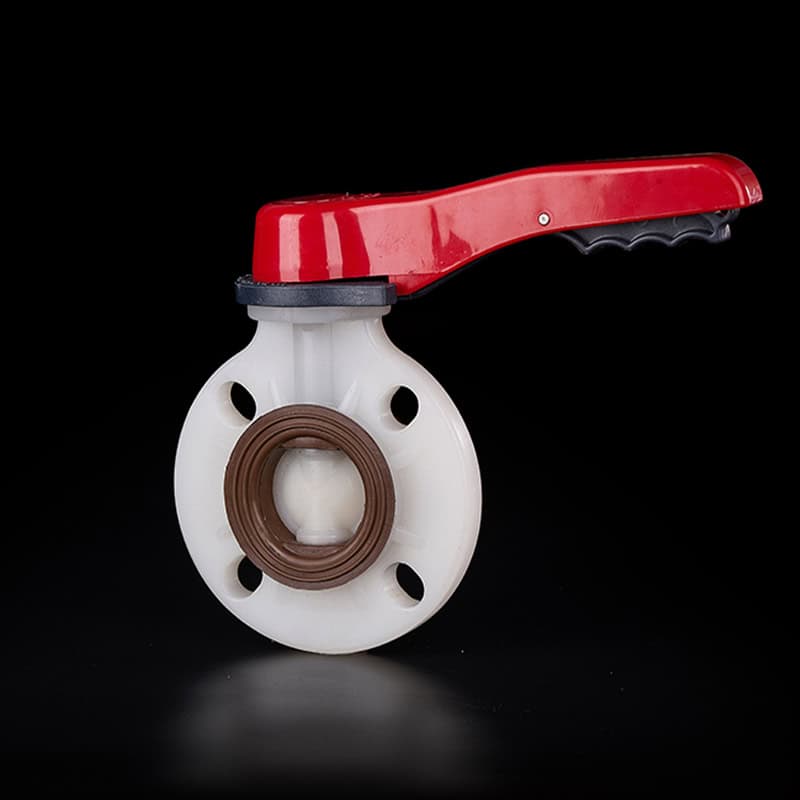
What is a wafer butterfly valve?
A wafer butterfly valve has a slim, flangeless body that sits between two pipe flanges. Long bolts run through the flanges and around the valve, squeezing it in place — there are no threaded holes in the body. Because so little material goes into it, the wafer style is the lightest, most compact and most economical butterfly valve, and its slim face-to-face length suits large diameters. With the disc fully open and lying parallel to the flow, pressure drop is low.
The trade-off is structural: both flanges have to stay bolted for the valve to be held. A wafer valve therefore cannot terminate a line, and if it needs service you have to shut the whole line down and loosen both sides. For long, continuous runs — large-bore water mains, cooling loops, and projects buying valves by the hundred — that limitation rarely matters, and the lower cost and weight win.
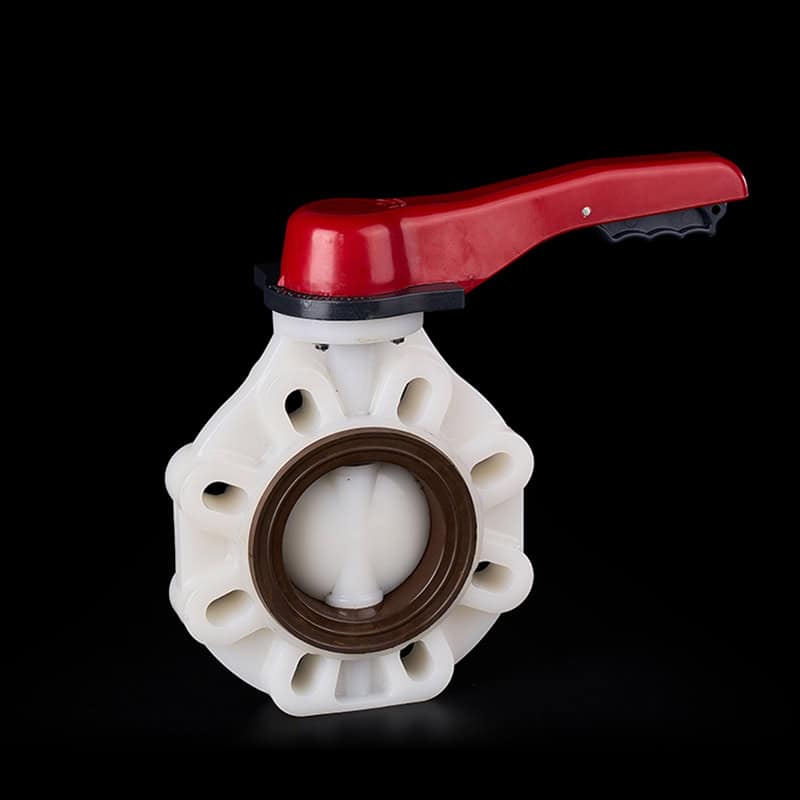
What is a lug butterfly valve?
A lug butterfly valve has threaded lugs (inserts) spaced around the body, matching the bolt pattern of the mating flanges. Instead of one set of through-bolts, you use two separate sets — one fastening the valve to the upstream flange, the other to the downstream flange. Each side is held independently, so the valve becomes a fixed part of the line rather than something squeezed between two pipes.
That independence is the whole point. A lug valve can act as a terminal (block) valve at the end of a line, and it supports dead-end service: you can disconnect the downstream piping for maintenance, replacement or inspection while the valve keeps holding pressure and the upstream side stays in operation. The catch is that dead-end duty is rated at a lower pressure than in-line duty, so always confirm the dead-end rating for your working pressure. Lug valves cost more and weigh more, but anyone who maintains a system tends to prefer them for exactly that reason — they make partial shutdowns possible without draining everything.
How to choose — wafer or lug?
The connection style is a layout-and-maintenance decision, not a chemical one. Work through it like this:
- Choose wafer when the valve sits mid-line in a continuous run, cost and weight matter, and you never need to remove one side on its own — for example large-bore water and cooling headers.
- Choose lug when the valve is at the end of a line, or when you need to isolate a pump, tank or branch and service the downstream piping while the rest of the system keeps running.
- Lean lug for maintenance-heavy systems where sections are taken offline regularly — the ability to break one flange without draining the line saves real downtime.
- Confirm the dead-end pressure rating with the manufacturer if you will rely on the lug valve to terminate a line under pressure.
- Mind space and volume — for tight installations or large project quantities, the wafer’s lighter, cheaper body is usually the better fit.
Wafer vs lug in plastic butterfly valves (UPVC, CPVC, PPH, PVDF)
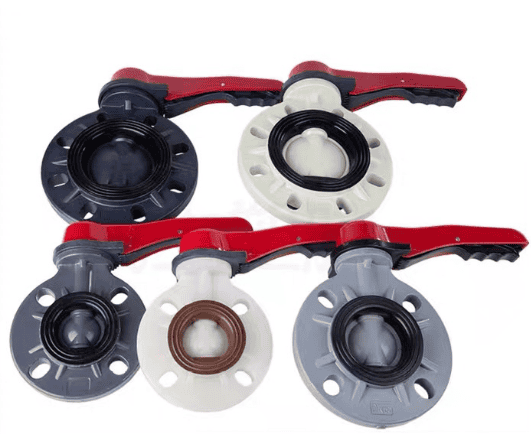
For corrosive and water service, you are really making two independent choices: the body material (set by the medium and temperature) and the body style (wafer or lug, set by the piping layout). At Huiya, all four materials are available in both wafer and lug bodies, in DN25–DN500 at PN10, with multi-standard slotted holes that fit ANSI Class 150, DIN and JIS flanges.
Pick the material by duty:
- UPVC (PVC) butterfly valve — large-bore water, seawater and reverse-osmosis lines, cooling water, and weak acids or alkalis, to about 55 °C.
- CPVC butterfly valve — hotter service to roughly 90 °C and stronger oxidising acids.
- PPH butterfly valve — good chemical and temperature resistance, well suited to alkalis and many organics.
- PVDF butterfly valve — the most aggressive media, including strong and oxidising acids, and high-purity duty.
One detail that catches people out: on a butterfly valve the seat (EPDM or FKM) is the part that actually contacts the media, so the seat sets the chemical limit alongside the body and disc. Get both right by working through our plastic valve material selection guide and our interactive chemical resistance selector, which returns the lowest-cost material that stays resistant at your temperature. These plastic valves are a common choice in water treatment, chemical processing and mining systems.
Seats and actuation
After the body style and material, two more choices finish the specification. The seat is EPDM or FKM (FPM): EPDM suits water and dilute acids and alkalis, while FKM handles oxidisers, many concentrated acids and higher temperatures. Operation scales with size — a lever with a 5° notched lock plate for repeatable throttling on smaller valves, a worm-gear handwheel on large bores, and a pneumatic or electric actuator where you need automated or remote isolation. For automated large-line duty, see the matching pneumatic butterfly valve.
Project example — seat and actuation upgrade
On a circulating-water system at a thermal-power plant in Shanghai, 72 ageing DN100 (4″) manual butterfly valves no longer sealed tightly and took four operators about half an hour to close — making maintenance isolation slow and wasting energy. Huiya engineer Andy worked with the plant’s technical lead on a retrofit that kept the existing valve bodies, replaced the original EPDM rubber seats with FKM (FPM) fluoro-rubber, added pneumatic actuators with FRL units, and tied the valves into the plant’s SIS. The system has run stably for about 18 months, and a job that used to need four people now takes one.
Frequently asked questions
Can a wafer butterfly valve be used for dead-end service?
No. A wafer valve is only held in place while both flanges are bolted, so removing the downstream pipe would release it. For end-of-line or dead-end duty you need a lug valve, rated for its dead-end pressure.
Is a lug or wafer butterfly valve better?
Neither is better outright — they suit different layouts. Wafer wins on cost, weight and compactness for continuous in-line runs; lug wins where you need to terminate a line or isolate one side for maintenance.
What is dead-end (end-of-line) service?
It means the valve sits at the end of a run, or that one side of the piping can be removed while the valve still holds pressure on the other side — letting you service downstream equipment without draining the whole system.
Can you remove a flange from a lug butterfly valve?
Yes. Because each flange bolts to the valve independently, you can disconnect the downstream piping while the upstream side stays in operation — at the valve’s reduced dead-end pressure rating.
Are plastic butterfly valves available in both wafer and lug?
Yes. Huiya supplies UPVC, CPVC, PPH and PVDF butterfly valves in both wafer and lug bodies, DN25–DN500 at PN10, with EPDM or FKM seats and ANSI / DIN / JIS flange compatibility.
Do wafer and lug valves use the same flange standards?
Yes. Both styles are made to suit common flange standards; Huiya’s multi-standard slotted holes fit ANSI Class 150, DIN and JIS drilling.
Get the right valve from the factory
Tell us your medium, its concentration and temperature, and the line size, and our engineers will confirm the body material, the seat and whether a wafer or lug body fits your layout — factory-direct, with a standard lead time of about 7 days.